

News
Coming of Age in Graffiti’s Zine Era
In his introduction to Subscription to Mischief, Skills creator Greg Lamarche recalls how a generation of writers took to independent media to share their art form with the world.
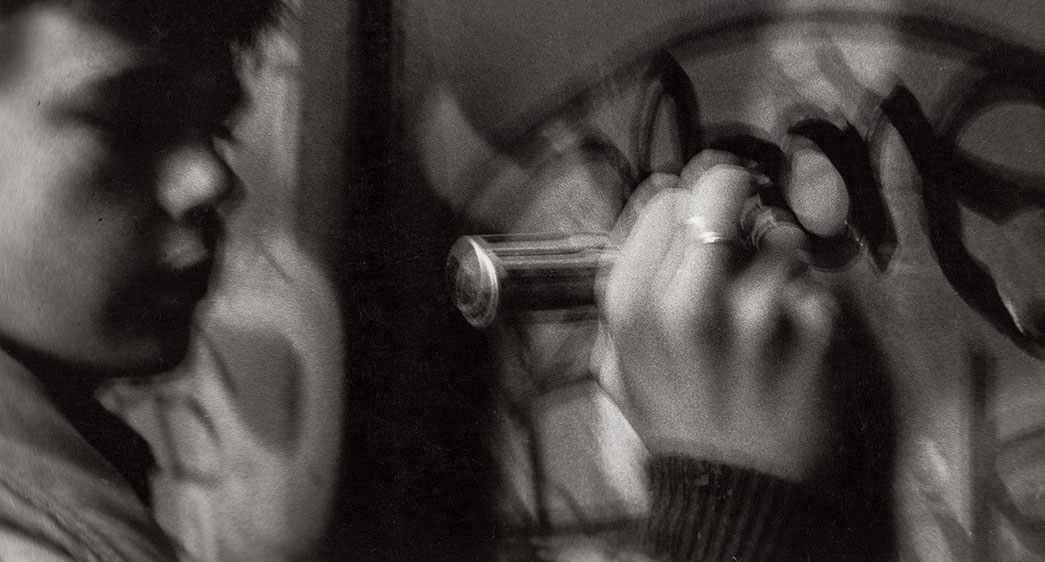
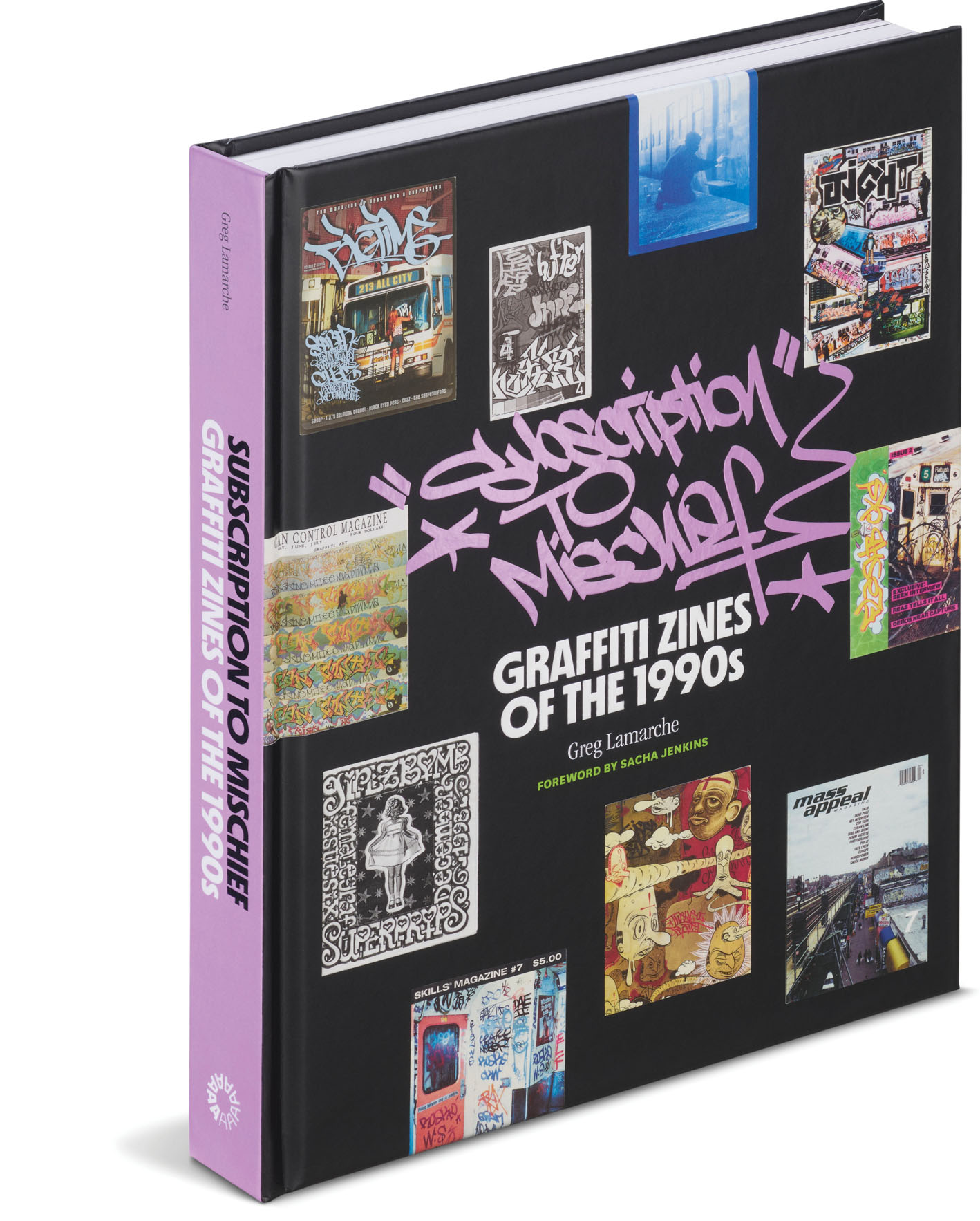
Graffiti Zines of the 1990s
Hardcover, 7½ × 9⅝ inches, 320 pages
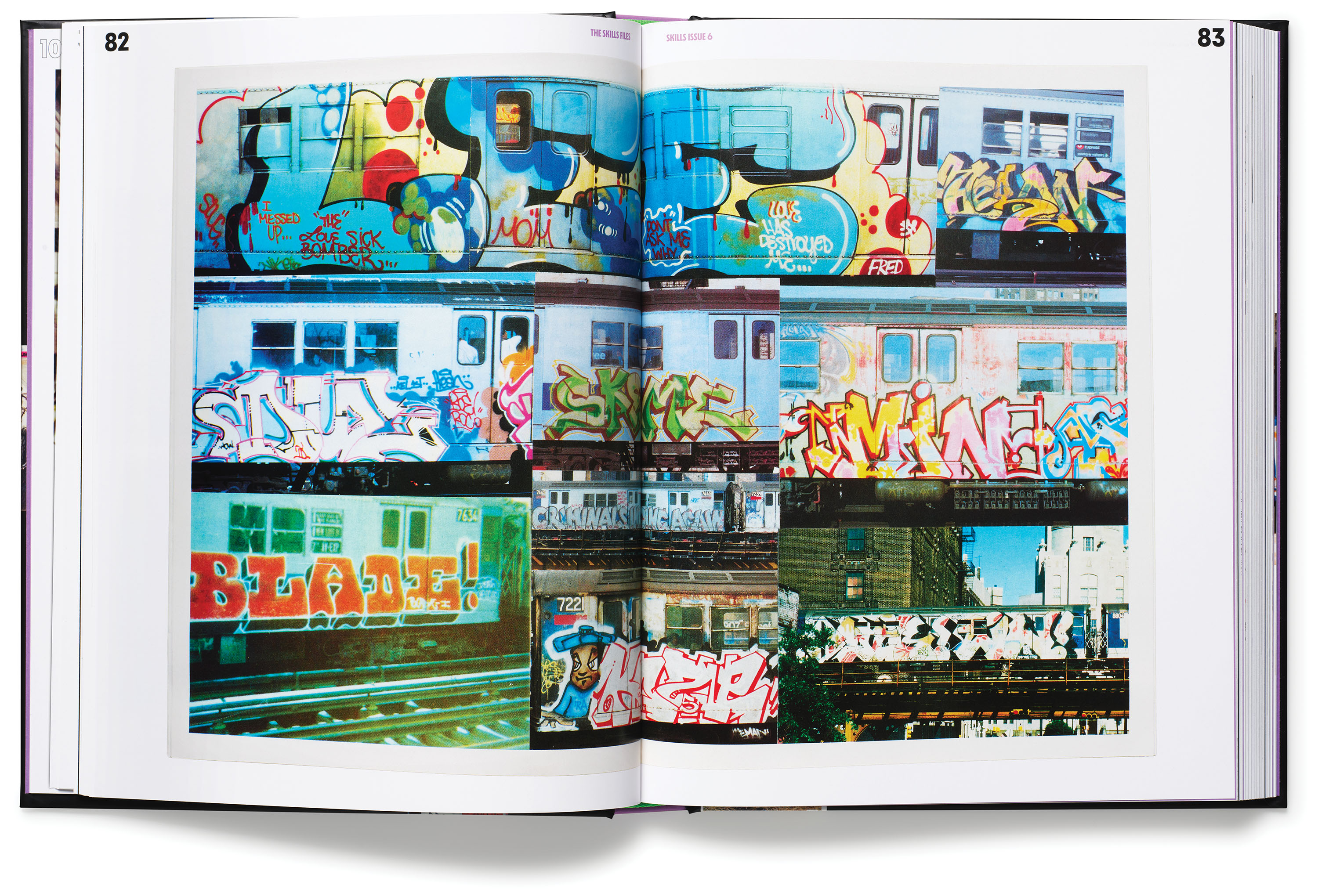
By the late 1980s, as New York City waged war on graffiti, practitioners became documentarians, picking up cameras to capture their creations before officials could erase them. Swapped by mail across continents, the resulting flicks were collected by writers and enthusiasts and sometimes cut and pasted into scrappy, spirited zines. These publications shared tags, throw ups, and burners far beyond the walls and trains where they first appeared. Subscription to Mischief: Graffiti Zines of the 1990s celebrates this surge in indie publishing with hundreds of reproductions from more than three dozen iconic titles — from grainy black-and-white xeroxed pages to glossy newsstand fare.
At the heart of the book is the personal archive of Greg Lamarche (Sp.One), whose seminal zine Skills ran for seven issues between 1992 and 1995 and drew submissions from writers around the world. A Queens kid who began writing on the streets and subways in 1981, Lamarche grew up alongside graffiti. Many of the letters, envelopes, flyers, and photos from his archive appear in print for the first time in the book, including flicks gathered for an eighth issue that never came to be. Together, they offer a rare look at a pre-internet community built by a new generation of graffiti writers and emerging media makers.
Read on for Lamarche’s introduction to the book, in which he traces his path from a tagged-up schoolyard to the pages of Skills and beyond. — Lucie Parker, Publisher, Letterform Archive Books
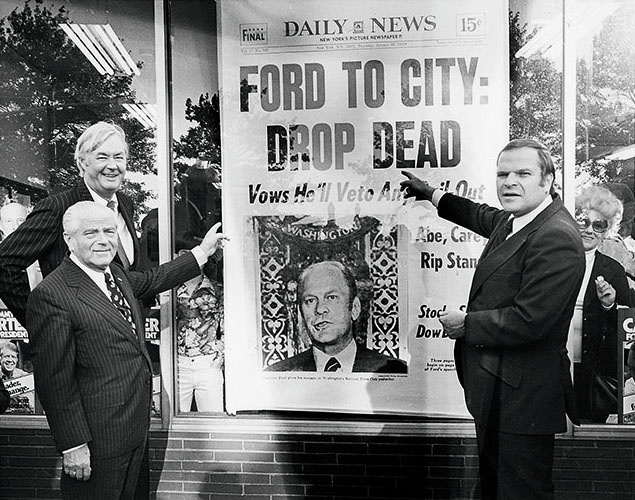
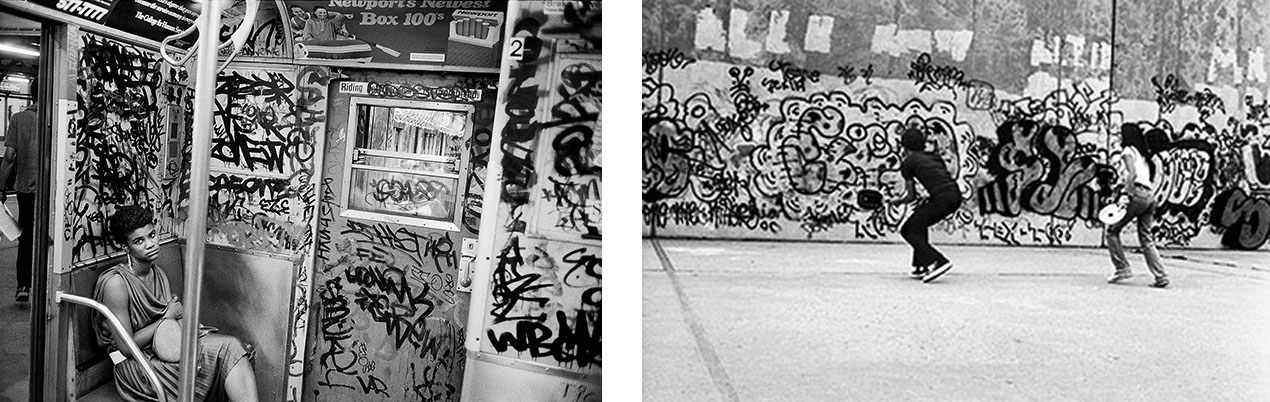
In 1975, the infamous headline “Ford to City: Drop Dead” graced the cover of the New York Daily News, referring to President Gerald Ford’s refusal to aid New York City, which was teetering on the brink of bankruptcy. While slashing services for the city’s residents, the financial crisis also meant that there was zero budget to control the graffiti epidemic (a name coined by the media), which created a perfect setting for the burgeoning art form to thrive. NYC kids who grew up in the 1970s and early ’80s knew nothing but graffiti on the subways and walls. For many, it had a profound effect.
By the time I started writing in fifth grade in 1981, I had been observing graffiti since I was old enough to make memories. And while the NYC subway era came to an end in 1989, when the city started buffing away writing as part of the war on graffiti, bombed trains lived on in a new sort of circulation: a worldwide graffiti photo exchange between practitioners, enthusiasts, and street photographers. It proved an important era for the art form, with writing becoming bigger and taking off internationally, jumping from the walls and freights to the next medium—print! As the creator of Skills, one of the earlier graffiti zines, I had a chance to share my obsession with tags, throw ups, and pieces on the printed page and participate in the media explosion that helped solidify graffiti, as well as to join a community that sustains this work to this day.
“We Don’t Need Ladders”
The year that Ford’s ominous headline hit the papers, I was in first grade at P.S. 101 in Forest Hills, Queens. The schoolyard that I played in every day was covered in graffiti. Everything happened in that schoolyard — it was the social epicenter of my neighborhood, where kids of all ages converged. It was at first a place to play ball and later to drink beer, smoke pot, listen to Rush, chase girls, and write on the walls. Before I wrote graffiti myself, I remember seeing guys and girls tagging in the schoolyard, putting their names up with rock bands and the occasional illustration of a quaalude or joint. Everyone had a tag or nickname back then, but it was really just kids spray-painting the walls and trains and influencing others like me. Even though I initially had no idea what graffiti meant or said, I took it for granted that it was just always there.
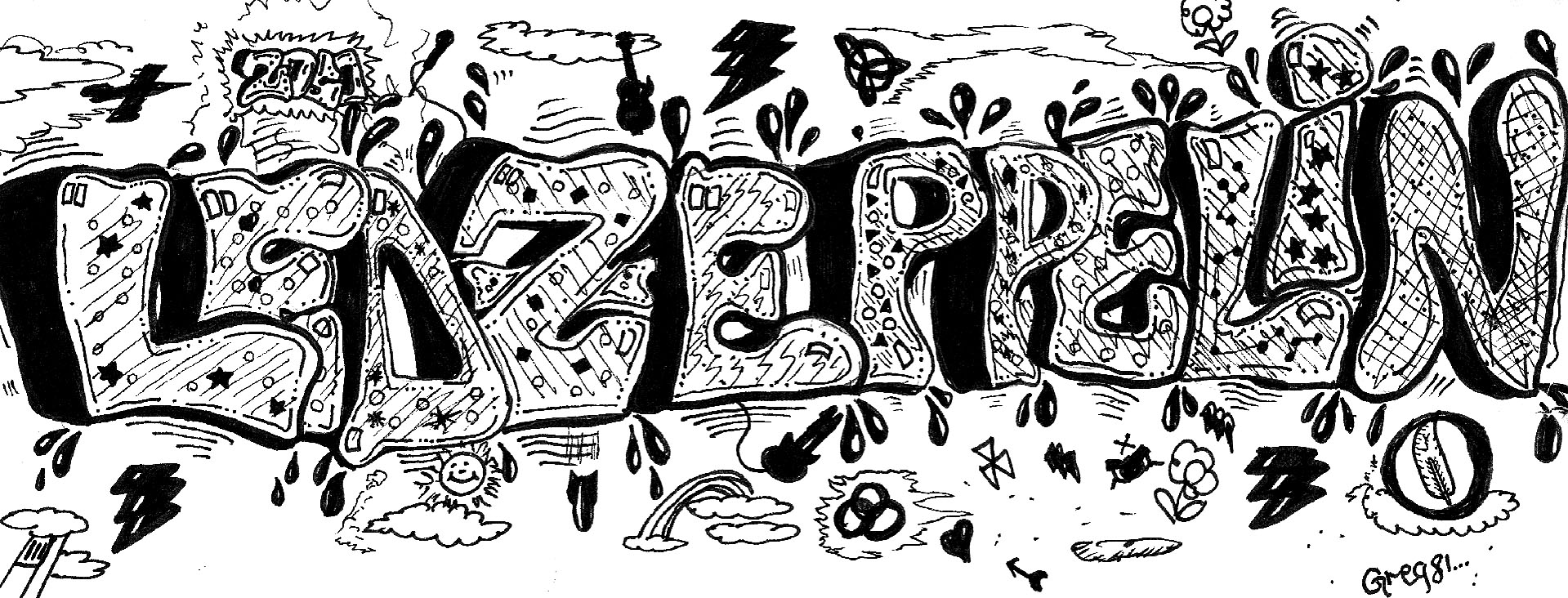
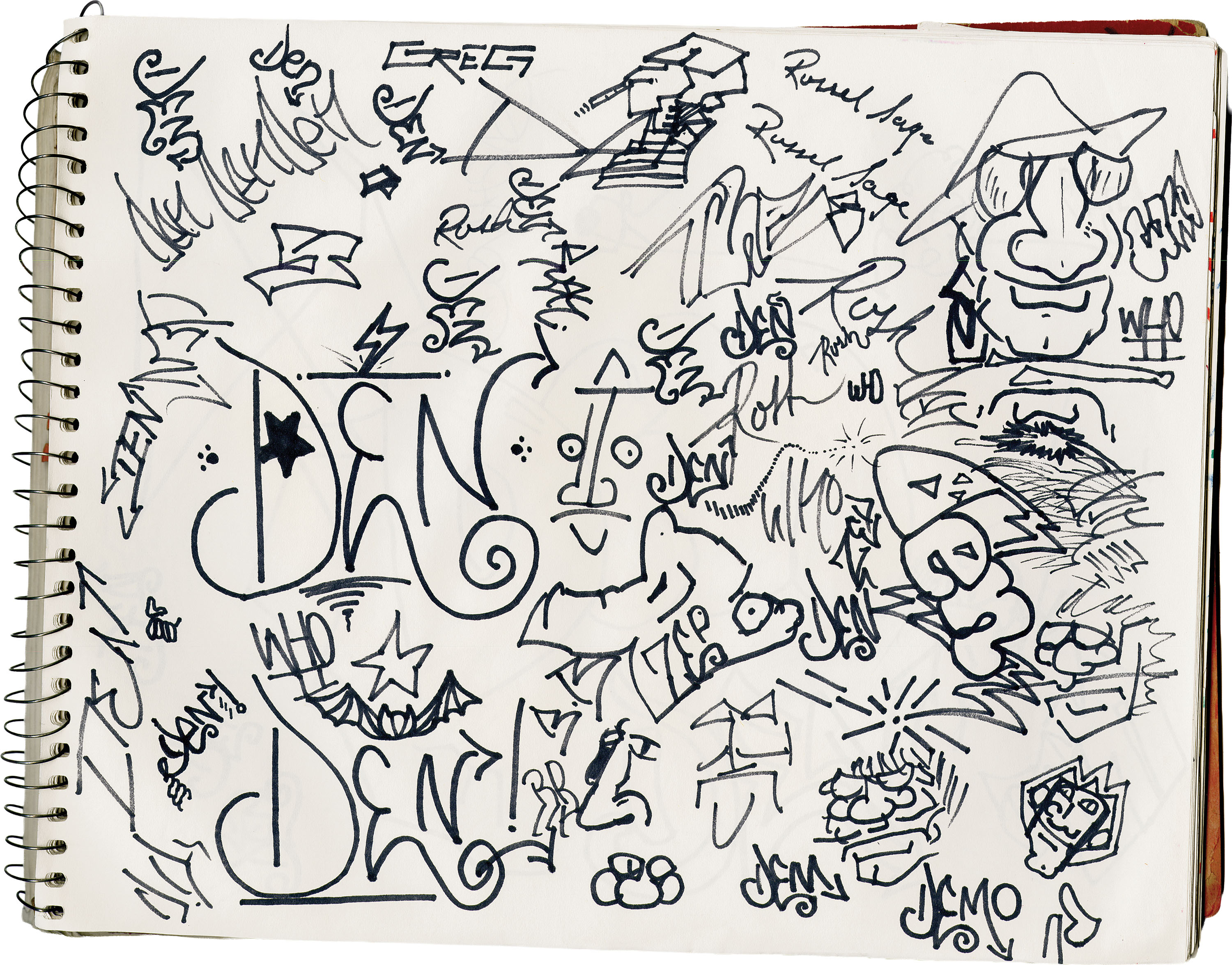
While the graffiti around me was at first hard to decipher, by the fourth grade I was starting to pick up on rock band logos I saw on the wall, like the VH symbol for Van Halen, or Led Zep or Zappa. I was constantly doodling letterforms on my standard-issue blue canvas notebooks and textbooks wrapped in brown paper bags (a mandate for preserving the decrepit public school books). As I look back at my old drawings, I see I was subconsciously emulating the bubble letters I saw in the schoolyard, putting drips, shines, and shadows on my letters a few years before I officially started tagging walls and trains.
The first time I could actually read a small bit of graffiti was like reading the opening line of a book; it was the start of my journey as a writer. And of course it happened in the P.S. 101 schoolyard — the site of many adolescent rituals as well as our games of skully, stoopball, throwball, stickball, Ultimate Frisbee, handball, basketball, and football. Stuff tended to accumulate on top of the auditorium (with some items intentionally “roofed” by some wiseass). When all the super pinkys, tennis balls, baseballs, and Wham-O Frisbees piled up too high, the custodian would go up on the roof to clear it all off, and a crowd would congregate below, waiting for him to chuck everything down.
One time, while all of us were watching and cheering him on, I noticed some crude graffiti on the roof. Written in white spray paint on a black patch of tar were the words: “We don’t need ladders.” Turns out some of the older kids would shimmy up a drain pipe and grab their own stuff off the roof, and one of them felt compelled to spray-paint the message. The writing itself didn’t have any style, but it was legible, and the words stuck with me. In some ways, it presented itself as a dare.
By 1981, I had attended P.S. 101 for nearly eight years, and in that time the school’s walls were never once cleaned or painted. By then, my friends and I had also started writing, adding to the layers both inside and outside the school.
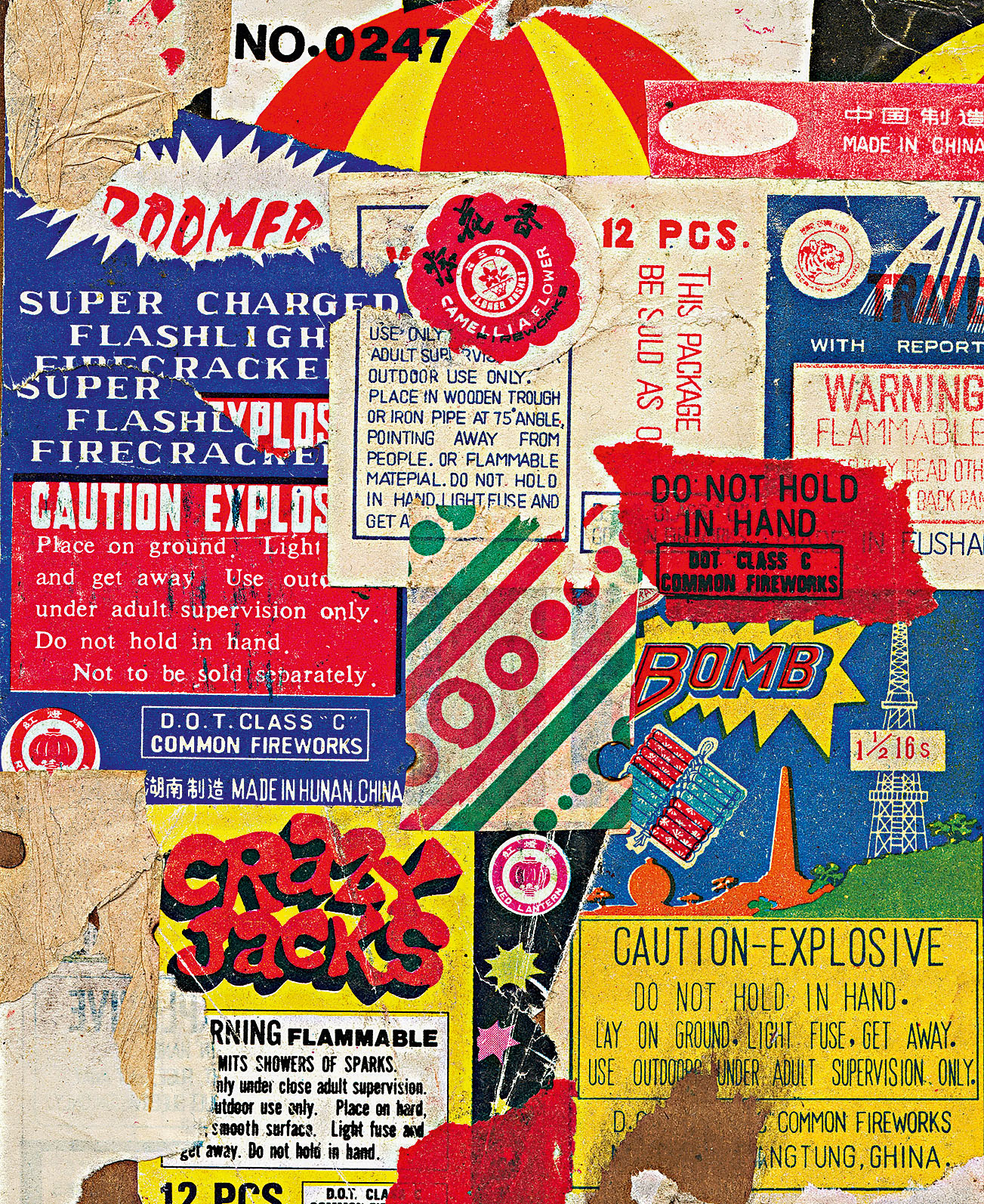
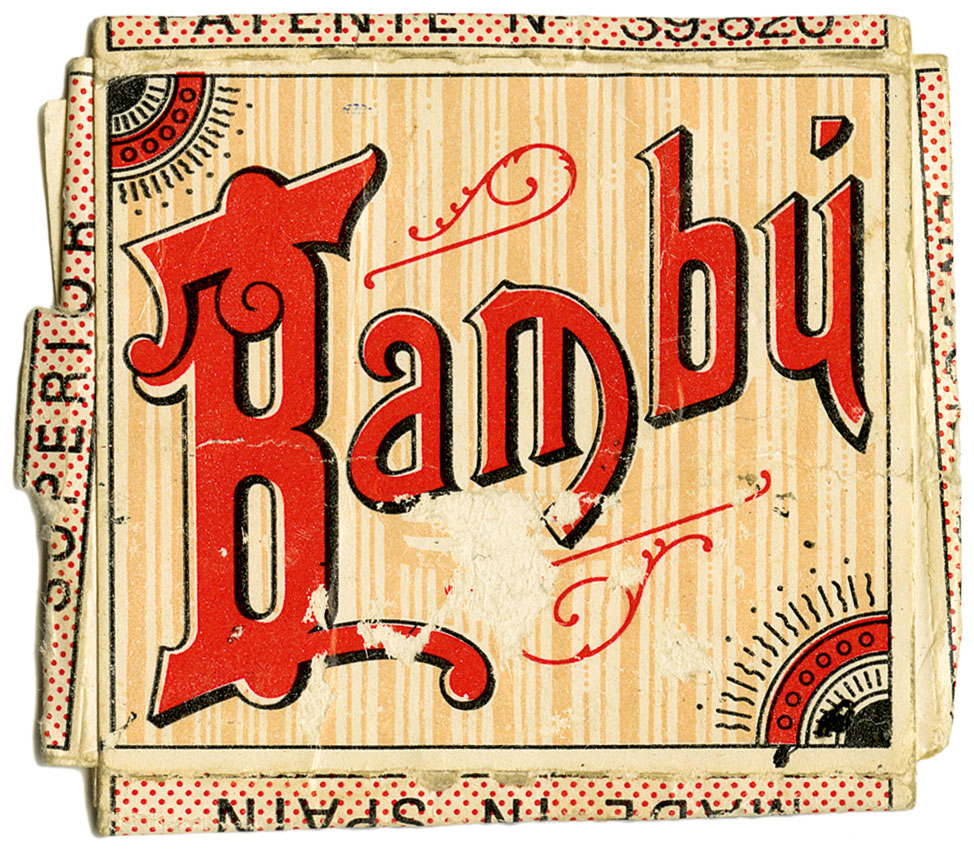
The summer of 1981 saw the start of another one of my life’s major pursuits: collage. At home, my mom made collages in a small studio down the hall from my bedroom. I loved watching her and my dad do anything creative, and we would often all draw together. My parents (both art history majors) exposed me to art early on, including the collages of Joseph Cornell, another guy from Queens.
In my neighborhood, there were two brothers—both a few years older than me—who sold fireworks. After a day or two of them unloading bricks of explosives, the schoolyard would be littered with spent firework wrappers, burnt-up cardboard, and empty packs of Bambú and E-Z Wider rolling papers. I started to draw and emulate the letterforms on the packaging and make collages with the bright and graphic remnants. And I’ve been collecting stuff for my art ever since.
Learn Before You Burn
Upon entering Russell Sage Junior High School that fall, my world of graffiti exploded. I was now trading blackbooks in the lunchroom with writers from all the surrounding neighborhoods. I learned the intricacies of what it took to be considered a successful writer. In that era, it was emphasized that you first learn to tag, then progress to bubble letters, then straight letters, and eventually wildstyle.
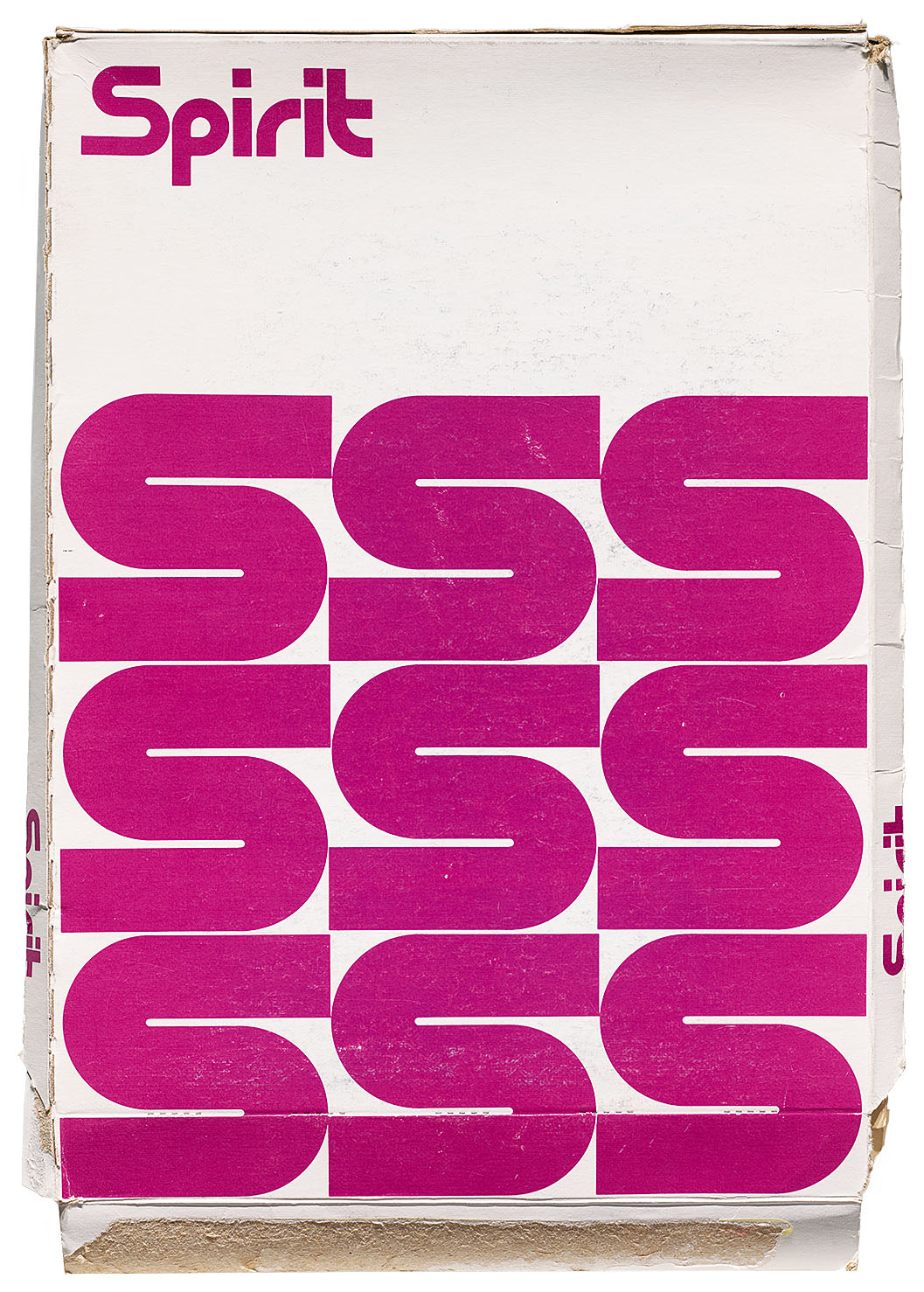
Junior high also turned out to be a gold mine for supplies. I realized early on that I could pen my own hall passes and raid the school’s supply room for books of Rexograph sheets, which were treated with a pigmented wax and used as masters for duplicating tests and worksheets. For me, though, they had another utility: providing the ink for a homemade marker, a.k.a. a mop. Once I got home, I would rip the pigmented pages out of the Rexo books and stuff them into a large jar, then add rubbing alcohol and let them soak. The result was a cheap but effective purple ink that I could transfer to a hollowed-out deodorant roll-on or shoepolish bottle and use as a marker — outfitted with a strip of felt from a chalkboard eraser as a tip — to stain the insides of trains.
You had to get supplies wherever you could, and it was a race to stock up before they were all snatched. I remember roaming alleyways to find open garages in search of old cans of silver spray paint, usually used for patching up cars, and BBQ Black for painting barbecues. Art-supply stores, hardware stores, and the local five-and-dime, which for me was the Woolworth on Continental Avenue, would all get hit for spray paint but also the caps on cleaning supplies, which helped you get the line width and effect you were after.
For writers tagging the insides of subway cars, train keys were also highly sought after. I recall tales of people ripping off MTA conductors for their keys or getting copies from someone they knew who worked in transit. My friends and I did not have original keys, but we were able to file down a skeleton key off an original and it worked. Having it changed the game — it was our pass to the city.
Making a Name for Myself
For most of junior high I mainly wrote within the perimeter of my neighborhood. My friends and I all looked up to the older writers in the community and asked them how they got their names. Two-letter tags were popular then, and the writers told us they took the fifth letter of their first and last names and then added a number. I got the feeling they were fucking with us, and to this day I’ve never heard of this method being used anywhere else. But I tried their formula and came up with the start of my first tag, OR. My mom was reading Catch-22 at the time and I was drawn to the red 22 on the cover, so I landed on OR22. This name didn’t last long, as I changed it to Den after one of my favorite comic characters from Heavy Metal magazine, but then it turned out a more established writer wrote that name.
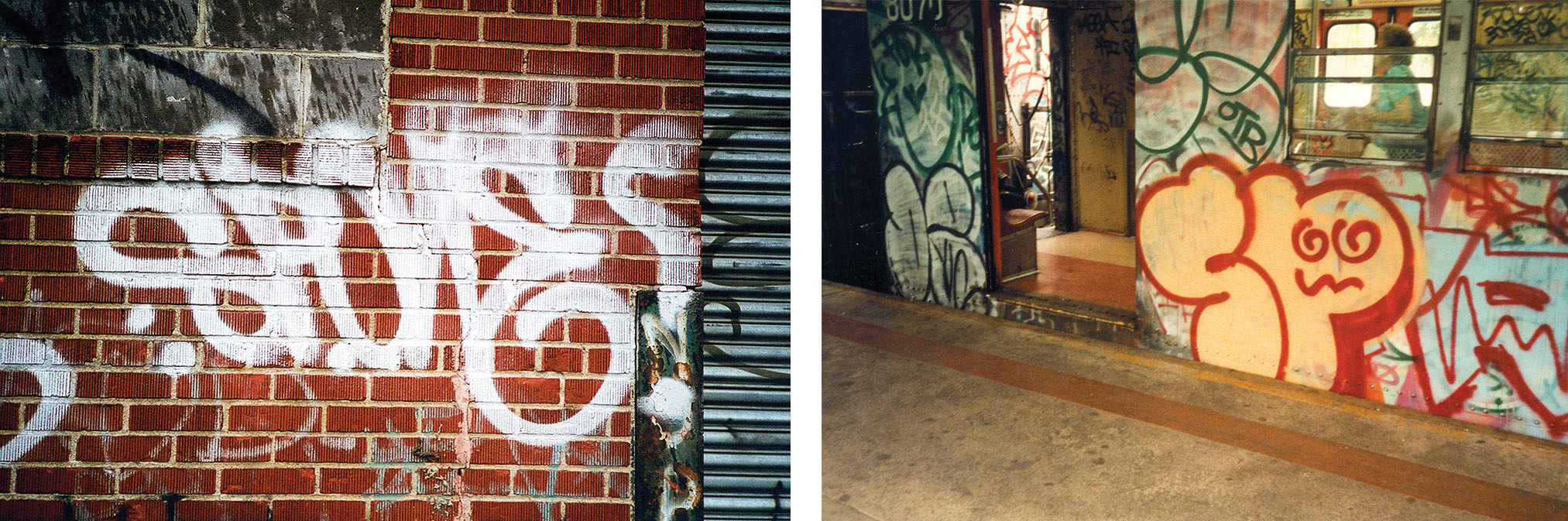
As I was searching for a new tag, I saw a very forgettable movie called Honky Tonk Freeway. It had a character named Spanky so I started writing Spankey, adding the e because I loved drawing that letter and wanted to make the name unique. This tag proved too long and I shortened it to SPY, but every neighborhood had someone that wrote Spy. So I finally settled on Sp.One and have been writing it ever since.
As I got older and better, I started to fan out to other parts of the city, like Coney Island, East New York, and Washington Heights, primarily to paint trains. By the time I got to college in 1987, I had spent most of my high school years bombing trains, highways, trucks, basically anything I could write on. Constructing and deconstructing letters was all I really cared about — sure, I did characters from time to time, but I was more concentrated on the letterforms, trying new ways to connect them and create original styles. No matter if it’s a tag, throw up, or piece, each letter always gets attention, but those at the start and end of a name are where you can really embellish with arrows, exclamation marks, and connections. Over time, because writers work on different surfaces, you learn to fill in challenging spaces with letters that have the right proportions. For me, creating symmetry, being aware of negative space, making sure letters aren’t too top-heavy or lumpy, and navigating strange angles in 3D pieces are all things you learn the more you produce.
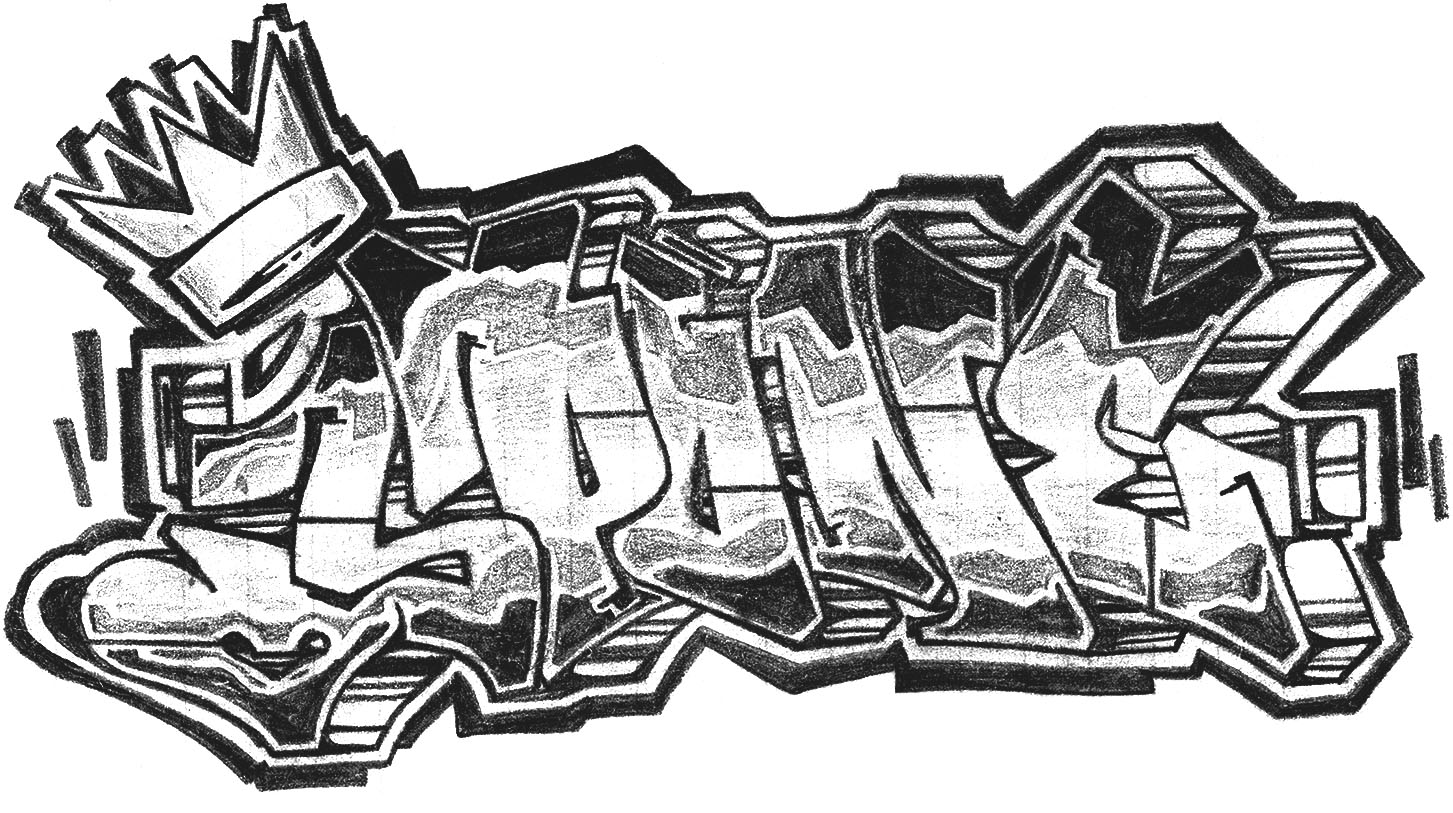
I never had a mentor, and — while it was key to carve out your own style and not bite other people’s letters — it was tough when you were just starting out not to emulate older writers, and we all did it. Seeing something skillful at such an impressionable age is what got you amped to go out and write in the first place.
Since my tag found me (as opposed to others who formed their names from letters that went together well), writing it can still be a challenge. But it helps me keep pushing myself stylistically.
The Birth of Skills
After graduating from college in 1991, I was living in the Boston area and bumped into a friend who worked as a night manager at a print shop called Copy Cop. He said that if I ever needed free color copies to come on by. I pitched him the idea of doing a zine, and we immediately started making Skills secretly after hours. This was pre-internet and, except for a handful of magazines that had come out in the late ’80s, Skills was part of the first wave of zines self-published by writers in the ’90s.
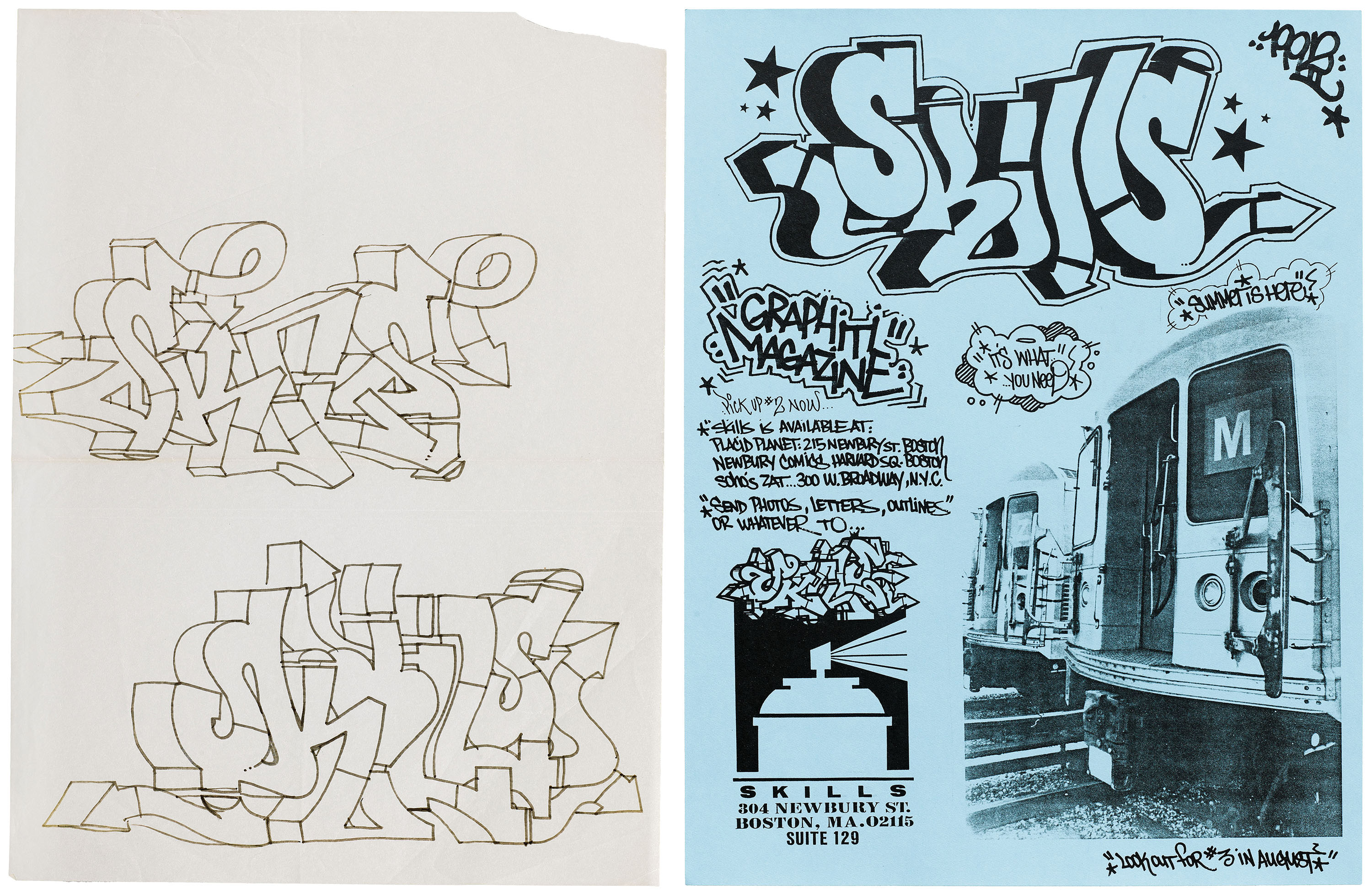
Skills was a great name; it was concise and could encompass a broad scope of graffiti. It was also a popular term with MCs who showed verbal prowess. The magazine was the culmination of all the things I love: collage, design, photography, and of course graffiti. I showcased writers who were adept at all four main elements of writing — from handstyles to throw ups, from straight letters all the way to wildstyle pieces. It was an opportunity to share what I found interesting about graffiti and to put more emphasis on throw ups, silvers, bombing, mop tags, and tunnels, not just the flashier pieces that were getting a lot of attention. Twist (Barry McGee), Edec, Dead DBI, and Cost and Revs, just to name a few, ended up being consistent contributors. My only real criteria for featuring photos was that the work had to be fresh and show that the creators had some skills.
There was also a regional aspect to the magazine. The first issue was made up of almost 100 percent Boston writers but, as its extent and distribution grew, so did the geographical pool of its contributors. Letters started pouring in from everywhere, including far-flung places like South Africa, New Zealand, and the Arctic Circle. These letters were mostly accompanied by hard-copy photos to consider for inclusion in the magazine, but I also received drawings, stickers, flyers, and of course other zines.
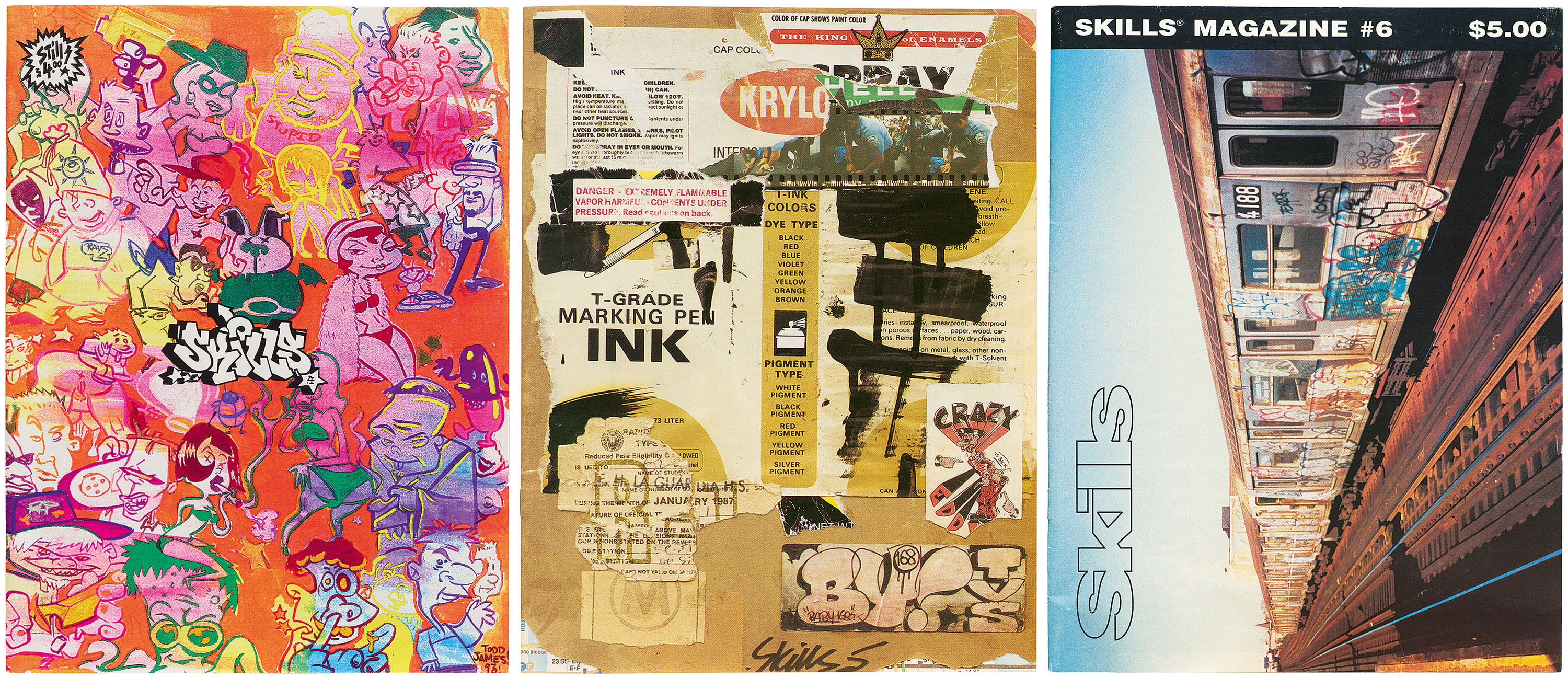
As time went on, it became key to join this international exchange so I could grow the mag and expand the breadth of its content. Train photos became coveted, especially as the war on graffiti went into full swing in NYC. At the same time, writers started to regularly paint trains throughout Europe and to share photos of their new styles and adventures. No matter how good or bad the flicks, I counted how many were sent and jotted the number on the outside of the envelope. I then sent back the same number as a fair trade.
When I started Skills, I didn’t have my own computer, so any text was printed from my dad’s and then cut and pasted, or I would do it all by hand. We printed the first four issues at Copy Cop. My friend and I worked through the night, with one of us printing the magazine’s pages while the other put the copies together with a saddle stitcher. The irony that we were making the magazine on the sly at a place called Copy Cop was not lost on us. The best part was their slogan: “Call the cops.”
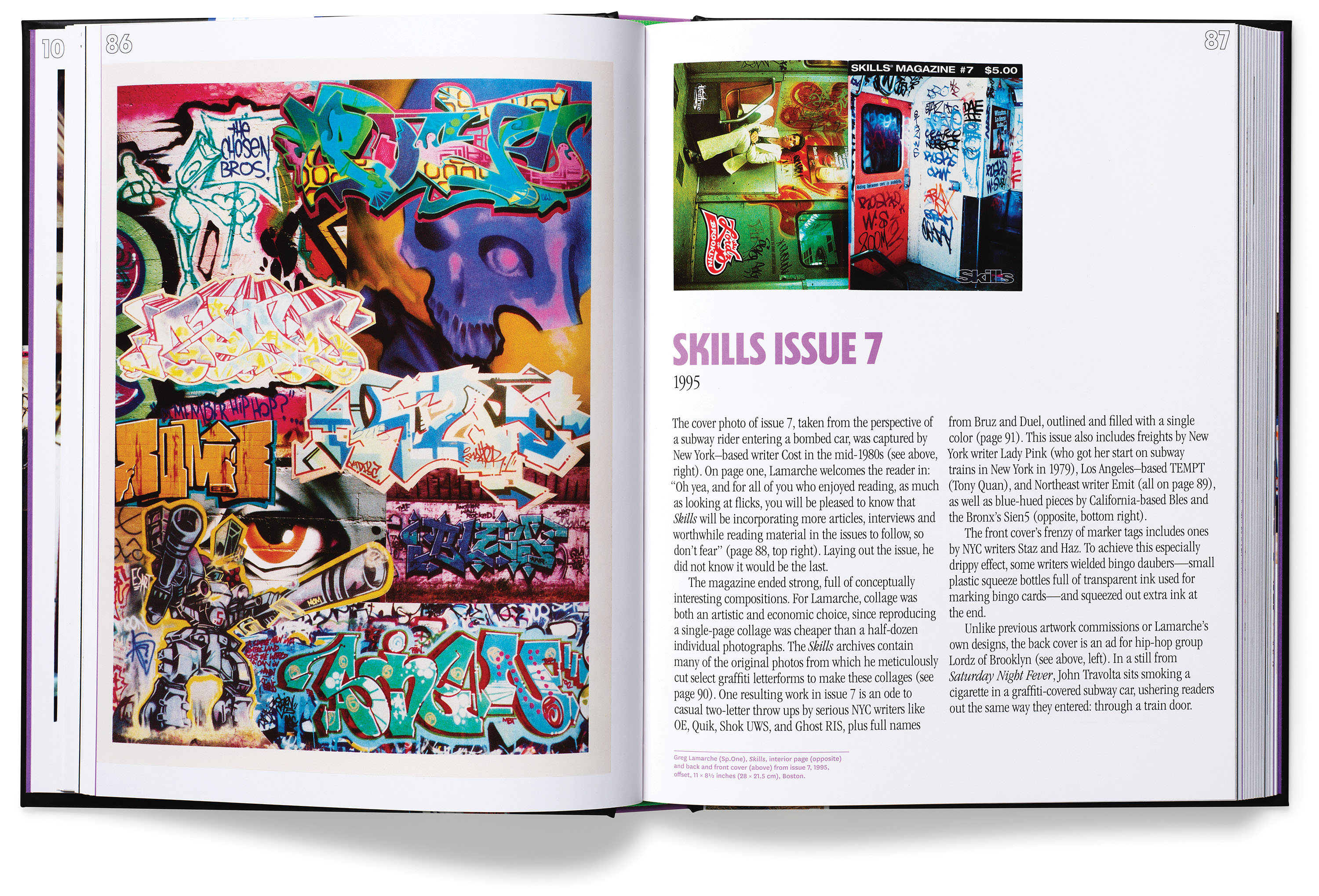
After an issue would drop, I would supply stores in Boston and then roll through Rhode Island, Connecticut, NYC, New Jersey, and Philly. At the time there were only one or two spots in each state that carried graffiti magazines, so we started off printing only 100 copies. But by the time we got to issue 4, we were making 500, then 5,000 (on glossy paper) for issue 5. Next came national distribution, and soon after, Tower Records came calling. Now instead of orders for 50 or 100 mags, orders were coming in for 1,500. The readership continued to grow, with issue 7 printed in a 10,000-copy run.
Escape to New York
It was a hot July 4th weekend in 1995 when I moved back to New York City from Boston. My initial plan was to continue making the mag, but Skills 8 was not meant to be.
Over the years, in the course of producing the magazine, I had inadvertently put a bullseye on my back as an influencer and a troublemaker — I had become someone the cops would have loved to make an example of. During the ’90s, penalties for graffiti got extremely harsh. In many places it was classified as a felony, and having a felony conviction on your record could trip you up for the rest of your life. After I left Boston, several people I knew got six months to a year for repeated graffiti offenses. I was lucky to get out when I did, as I know they would have pushed for a stiff sentence had I gotten busted.
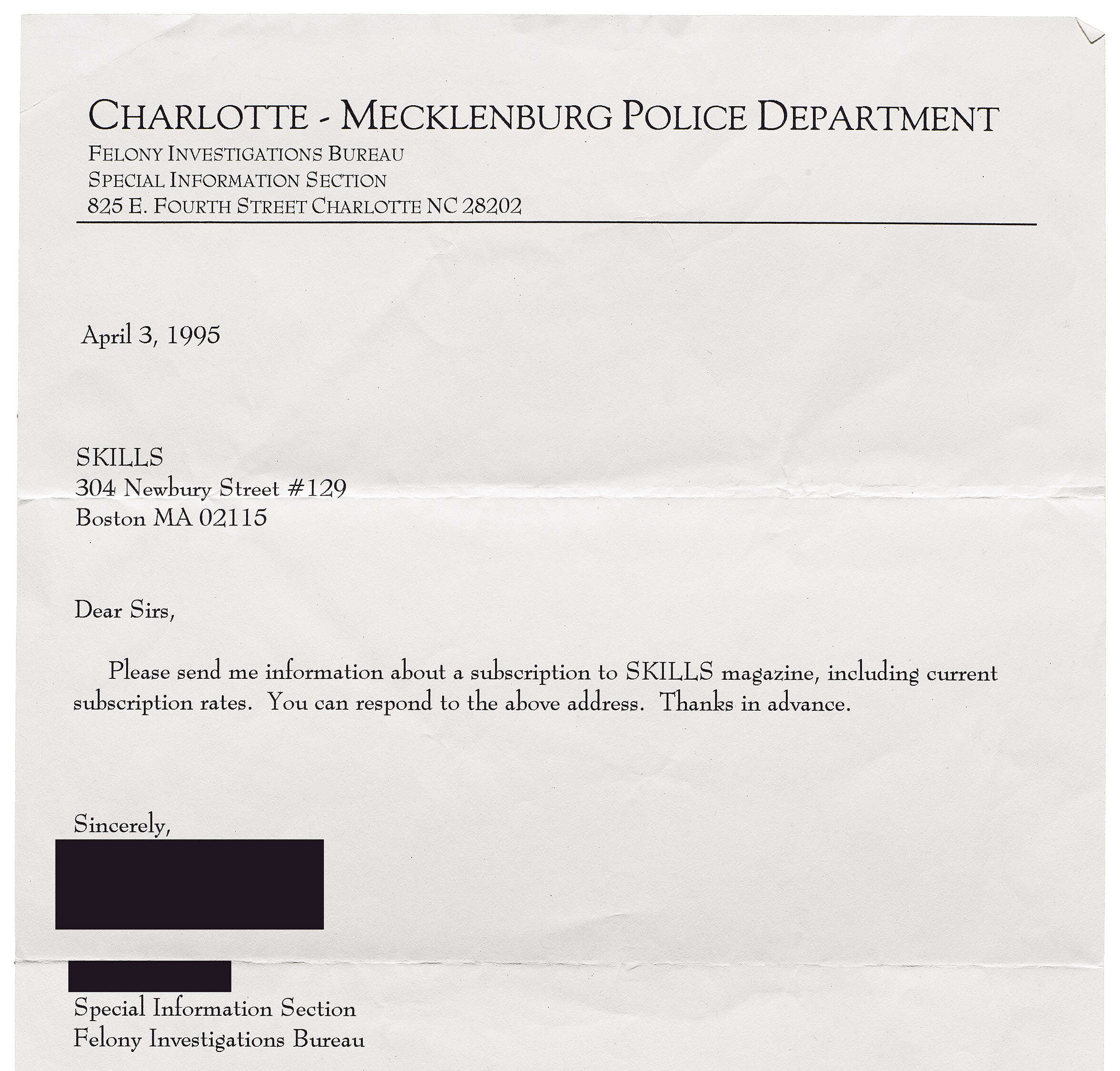
It was a volatile time to be a writer no matter where you were. New York cops started raiding people’s houses, and anything with graffiti on it was hauled off. It could take years to get your possessions back. I didn’t want to give up my archive to some overzealous cops or have my name splashed in the local newspapers — all reasons to rethink Skills and start fresh in New York, a much easier place to get lost in.
There were also business reasons to get out when I did. The magazine universe was huge then, and one of the downsides was that the zines had started to get repetitive, as everyone would vie for the latest productions. Many people also simultaneously sent the same photos to different magazines, creating even more overlap.
Permanent Records
When I left the Boston area, I moved my P.O. box from Newbury Street to Queens, where I continued to receive Skills-related mail, well into 1997 — more than two years after I shut down the mag. It was fun to keep trading correspondence, but email eventually took over, and physical mail slowed to a halt.
Still, I kept every scrap, and those letters and flicks, zines and flyers, have become a time capsule of a unique era. Cumulatively, they show how practitioners connected around the world before graffiti became a full-fledged business (and before the internet took over — snail mail was our slow Instagram). This personal collection also contains many photographs and pieces of ephemera that I received after I stopped publishing Skills, so they have not appeared in print before. It’s been great to revisit these artifacts and reconsider their significance — not only as a snapshot of when they were made but as a testament to how they remain relevant to the ever-evolving medium.
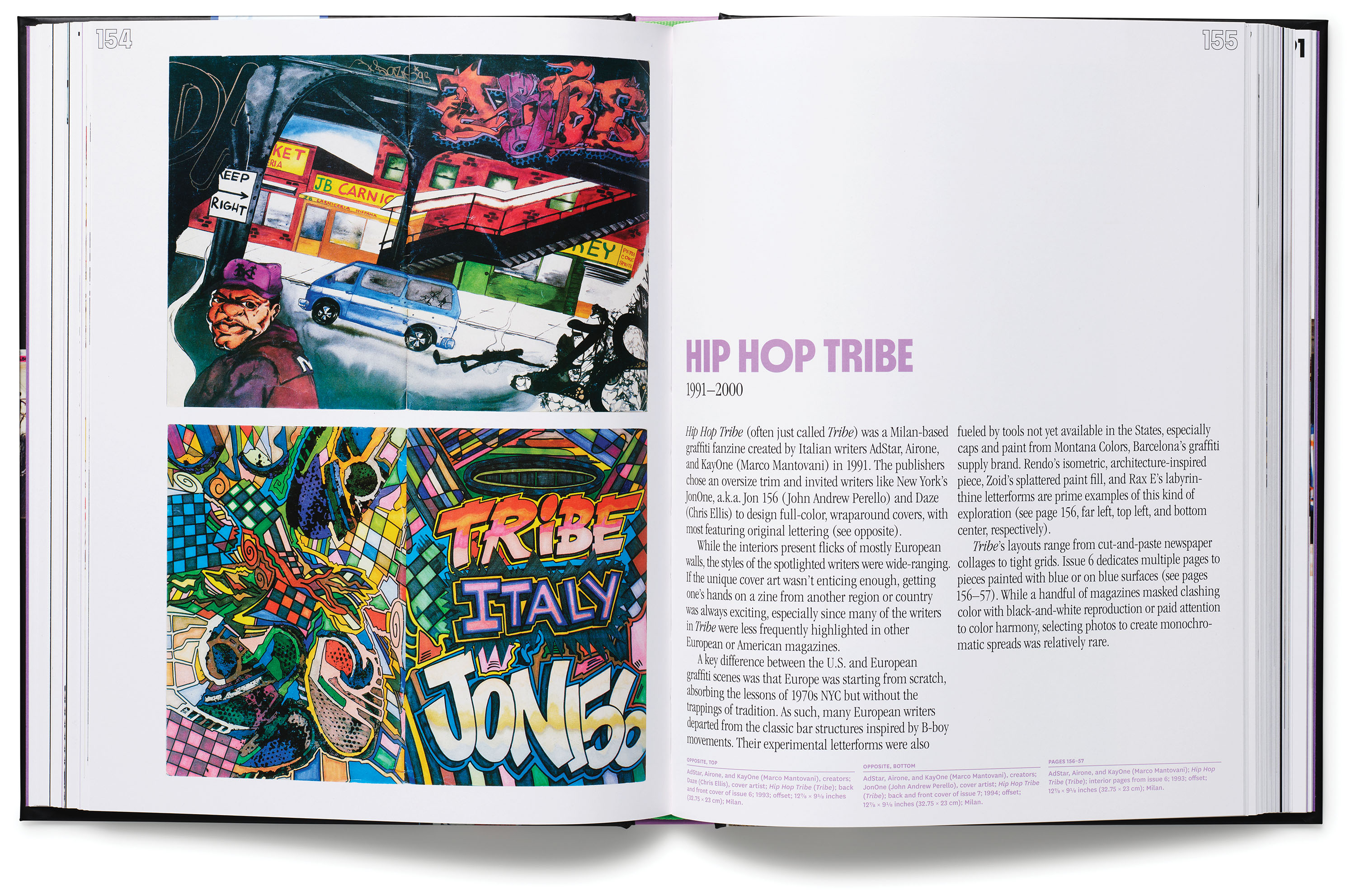
Going to my P.O. box was always fun (even though I watched my back, especially in the Newbury Street days, in case it was being staked out by police or writers wanting to appear in the next issue). The more time went on, the more magazines came in. It was a reminder that graffiti was growing outside cities and spreading to every part of the globe. But I was still an NYC graffiti fan first, so some of my prized possessions were copies of G.S.E.L. — I always dug seeing the rare pics from all over the city in this mag. (If I remember correctly, it was also the first that featured one of my pieces.) I was also a fan of Styles for Miles (SFM), with its dedication to sketches and outlines. As I continued to receive mags from abroad, Hip Hop Tribe (Tribe) from Italy stuck out because of its large format and wrap-around, full-bleed cover art. And Twelve Ounce Prophet created a strong following from the get-go that would later transform into one of the early online graffiti forums. Whether they were black-and-white xeroxes or printed in full color with high-end varnishes, these magazines’ strengths ultimately lay in their intangibles—in their wit and their promise of sharing something new.
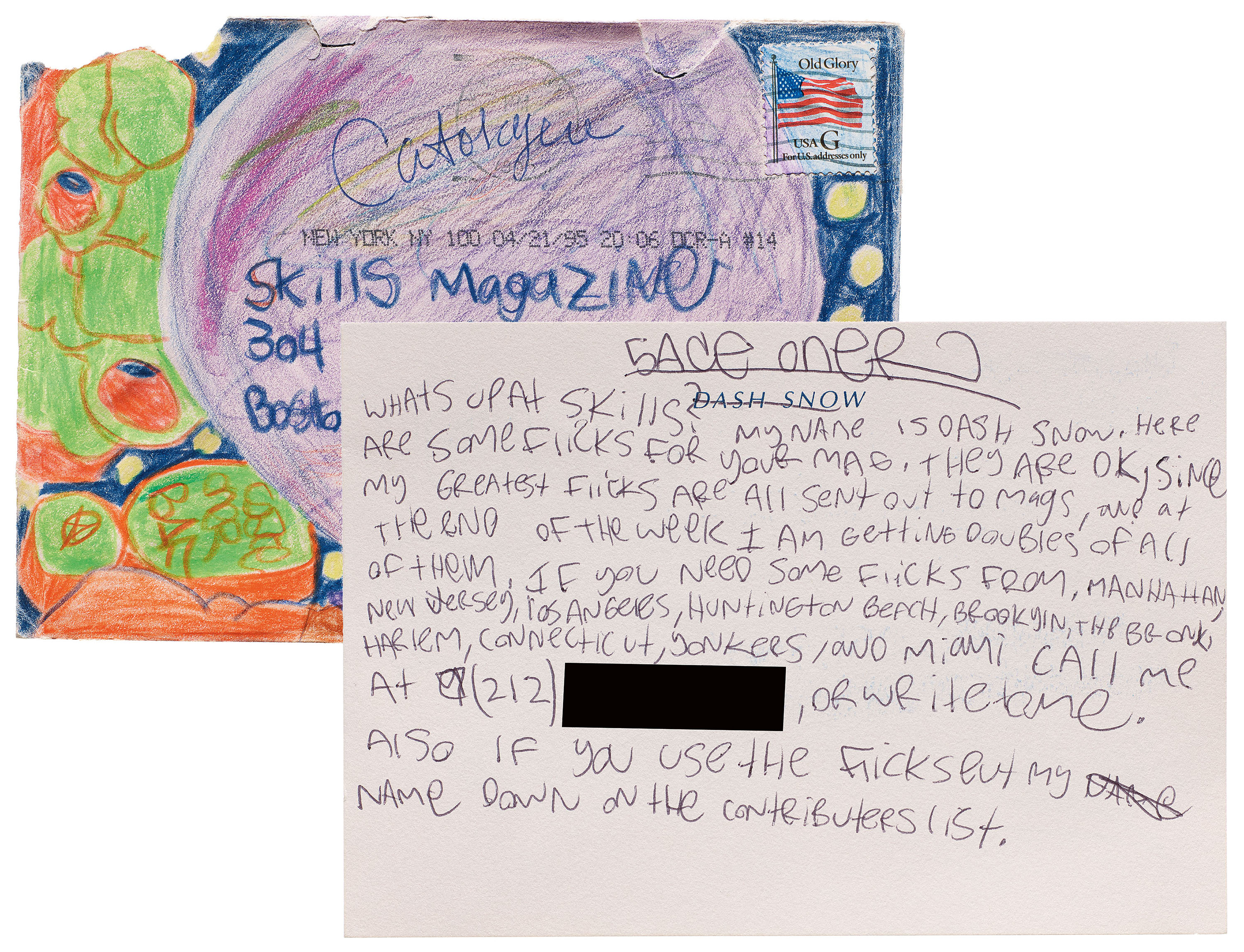
One of the interesting aspects of this archive is that many of its contributors went on to become world-renowned artists. A good example is Dash Snow, a.k.a. Sacer. I received a few letters from him around 1995 when he was a teenager. He was new to writing but he was taking photos of street graffiti and shouting out NYC wildstyle pioneer Tracy 168, so right off the bat he had a sense of history and a desire to document. The letter from Dash included in this book offers a rare glimpse into some of his early work.
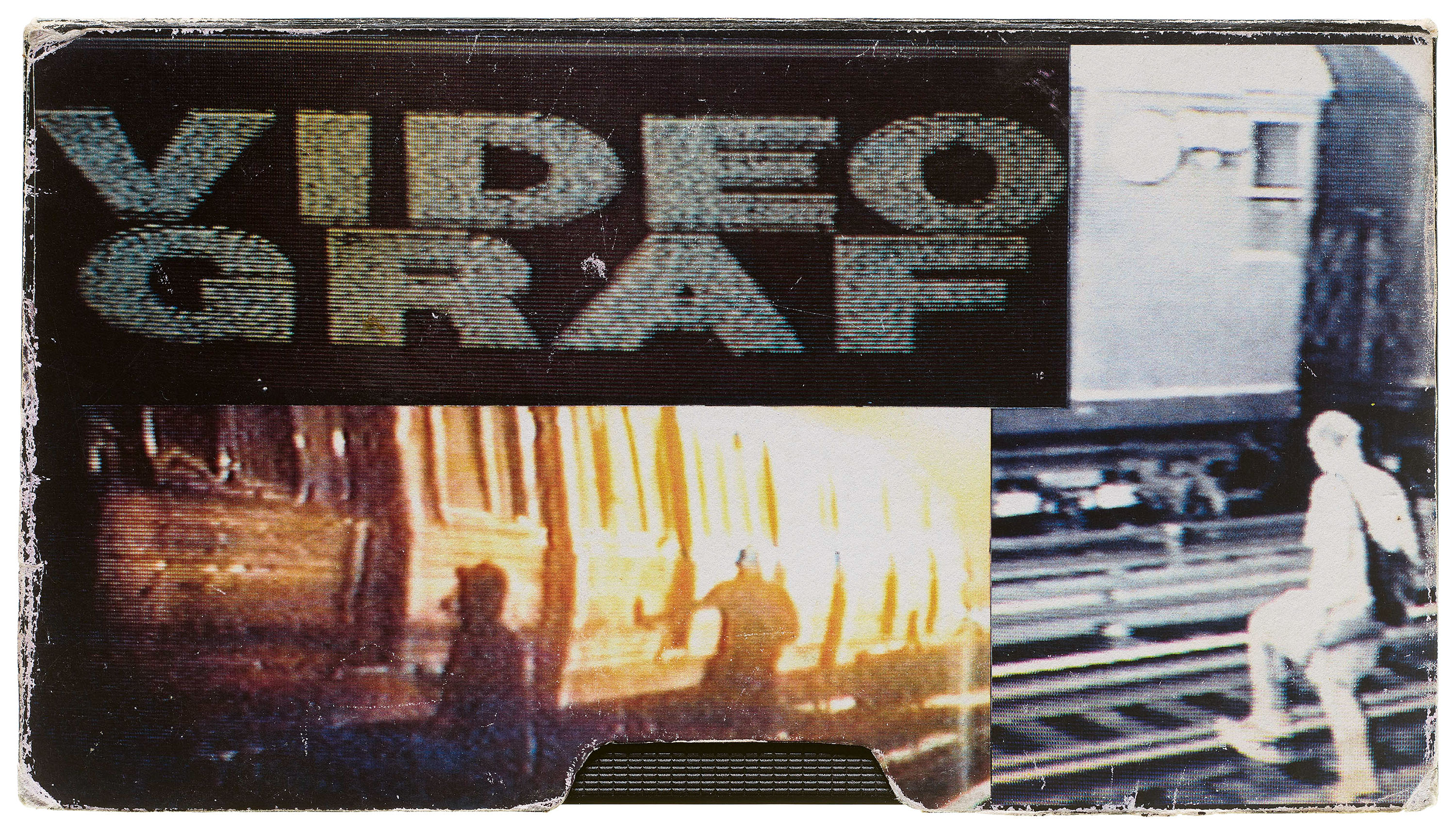
Another example is William Green (Nic One), one of the collaborators in Videograf, a graffiti zine reimagined in video form and issued over VHS. An accomplished photographer in his own right, Nic One took an incredible collection of subway photos and was a disciple of photographer Henry Chalfant, who was a de facto mentor to a lot of us in the graffiti world. Nic was very kind and made copies of almost a hundred photos to include in Skills 8. After many years, I’m grateful that we can shed some light on these gems from people who really had an impact on the culture.
Transfer of Power
Overall, the big takeaways for me from graffiti’s zine days are the connections made and how the torch was passed from street photographers like Henry Chalfant, Jim Prigoff, and Martha Cooper to the practitioners themselves. Now the people who were painting were also the people documenting and publishing other people’s work as well as their own.
Today, a few graffiti magazines still exist, but documenting graffiti has largely shifted again, finding its way onto the omnipresent internet. Now Instagram is the go-to place to see graffiti in all its forms, broadcast live from every corner of the planet, twenty-four hours a day. It is a match made in heaven — people are literally posting flicks while the paint is still wet.
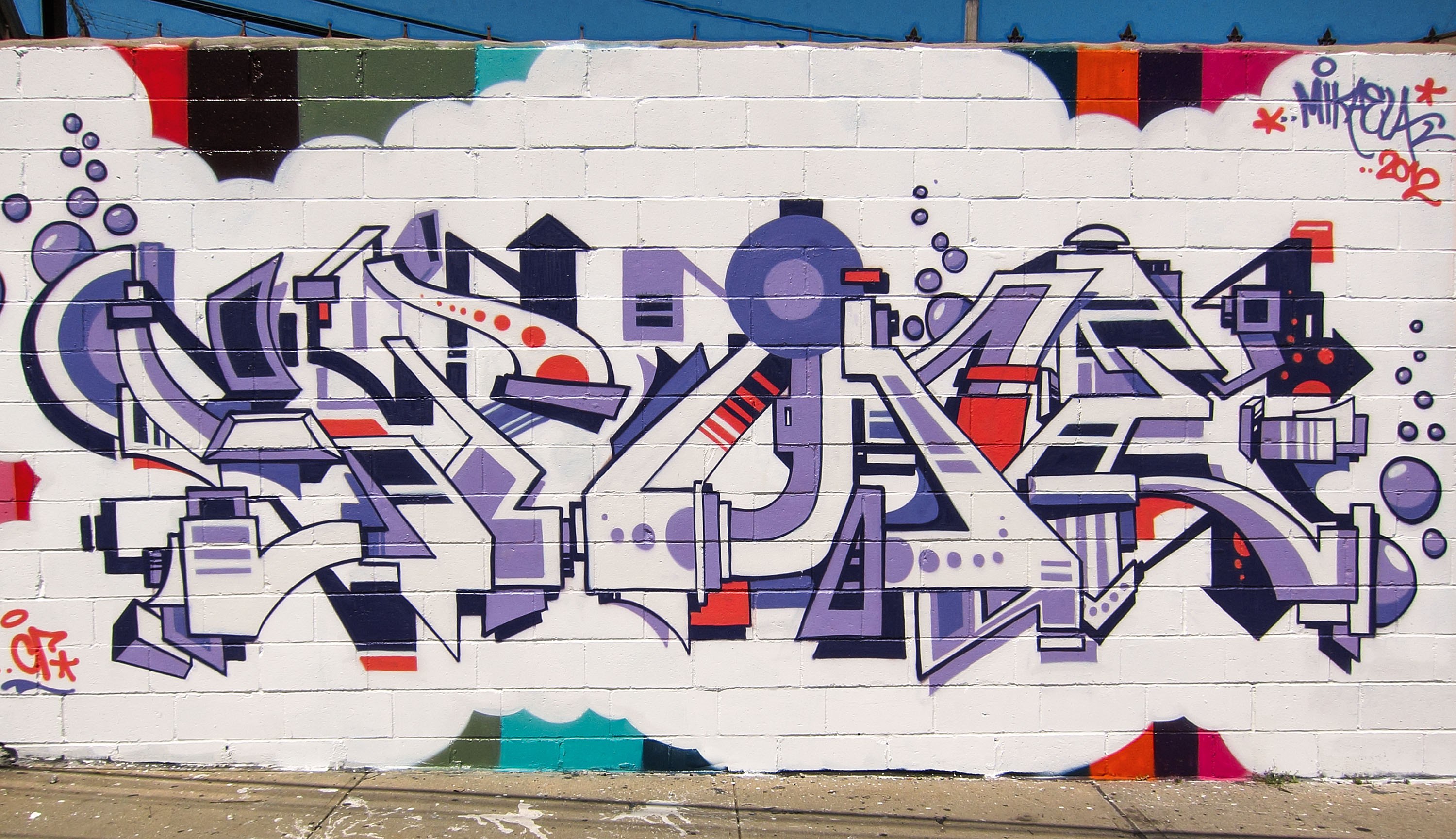
While the way we view these images today may be different, their ubiquity reinforces how important the ’90s magazine explosion really was. Early zine publishers helped make graffiti more compelling to those who may not have appreciated its importance when they saw it on walls and trains. Early desktop publishing tools and cut-and-paste prowess allowed us to put graffiti in print and give it staying power, even if the art itself was buffed away. Circulating these mags in music and lifestyle stores helped to further spread its aesthetic and message. Today there is an elevated appreciation for all things having to do with writing, and it continues to grow through film, fashion, books, and major museum shows. It is now genuinely considered an art form.
This exhibition and accompanying catalog capture the magic of the community that came together — completely unorganized, on its own terms, without major media backing or adult supervision — to form its own subculture and push graffiti into the twenty-first century. I’m proud to have been a part of its lineage. For me, creating the magazine changed my life and was an important step in becoming an artist and having a voice in the world. Today I continue to paint walls, make collages, show fine art in galleries, work on commercial projects, consult on films and books, and build relationships with people that I never would have met if it wasn’t for writing.
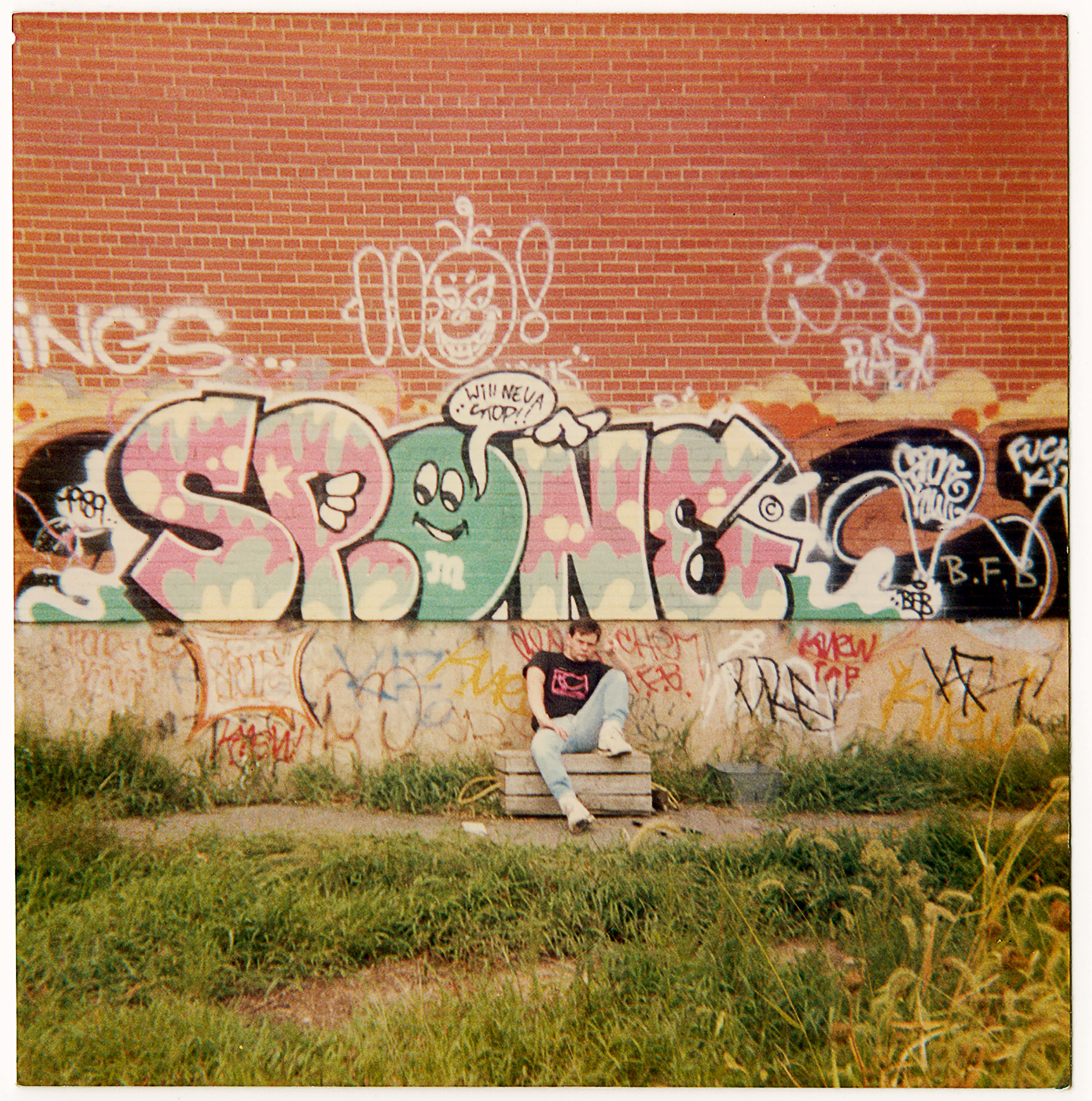
Sometimes it’s wild to reflect on the fact that graffiti was completely invented by kids — that the schoolyard at P.S. 101, along with trains and walls and billboards, were the proving ground for an art form that is now seen not just as legit but as important to the visual history of the last century. It was and still is a youth movement, but for writers who were entering their twenties during the ’90s, the mag scene was part of growing up. It was the next step for the subculture to mature and, in many ways, to recognize itself as an incubator for things to come.
While the publications didn’t last, the relationships did — we’ve gone from copying and pasting flicks into zines as college kids to teaming up to bomb walls when we’re over fifty. All that time, energy, and fortitude — and the real threat of getting arrested and going to jail — were not in vain. Creating content under pressure lives on.
Greg Lamarche (Sp.One) was born and raised in New York, began writing graffiti on the streets and subways in 1981, and published Skills, a seminal graffiti magazine, in the early 1990s. Lamarche has worked as a fine artist and an illustrator since 2000 and has been featured in numerous publications including The New York Times, the San Francisco Chronicle, Print, and Juxtapoz. His work is also featured in several books, including Graffiti New York (2009) and The History of American Graffiti (2011). Lamarche also created the cover graphics for World Piecebook (2011).
To learn more about Subscription to Mischief, discover the exhibition online or schedule a guided tour or research visit to view our collection of graffiti books, zines, and ephemera.
To preview and purchase the book, visit our shop at the link below. Members receive 10% off all Letterform Archive titles.