News
Martin Venezky: Process Work
Our next pop-up exhibition is on view in the Reading Room gallery from September 26 to November 8, 2026. Jon Sueda speaks to Martin Venezky about the body of work that inspired it.
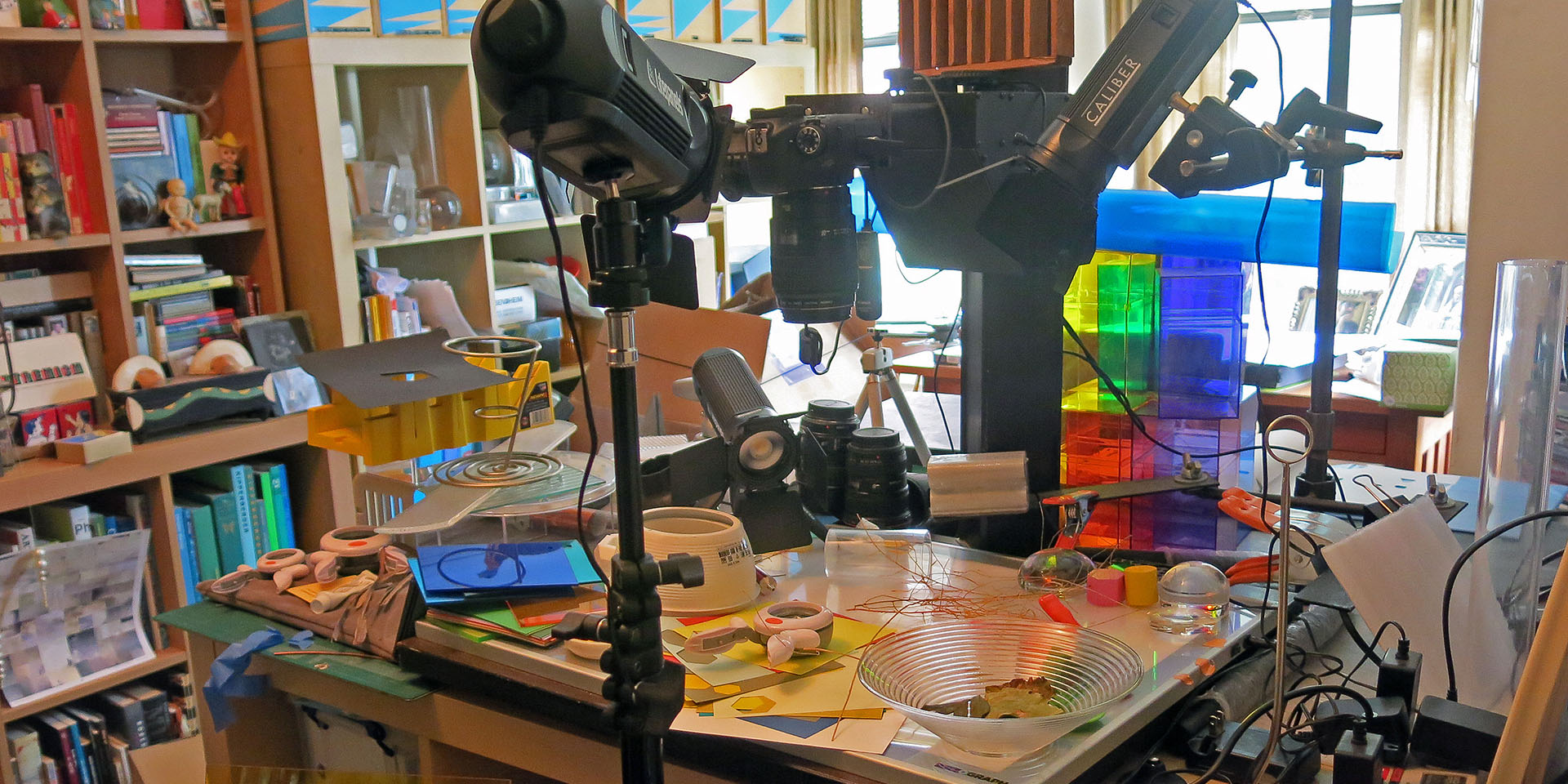
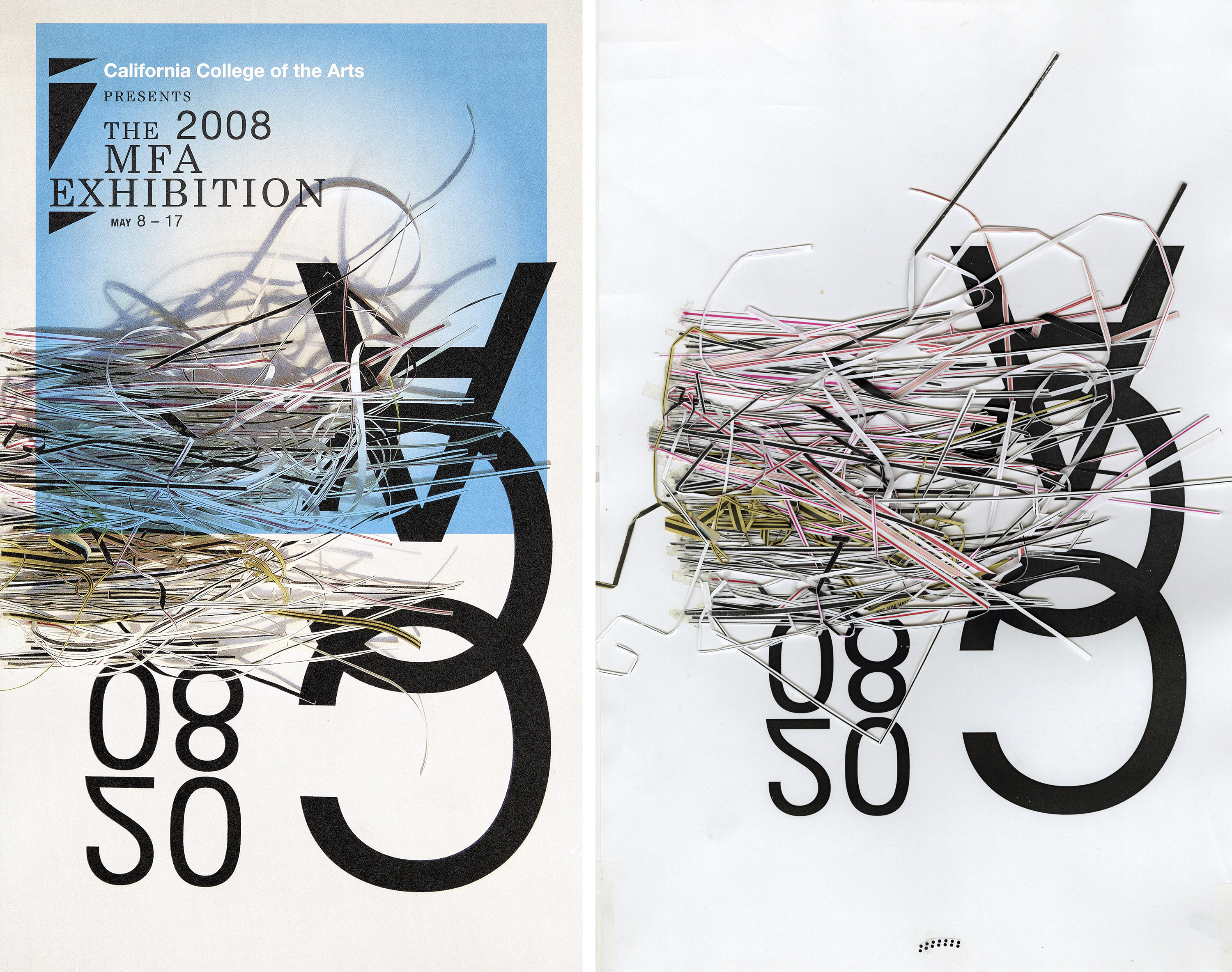
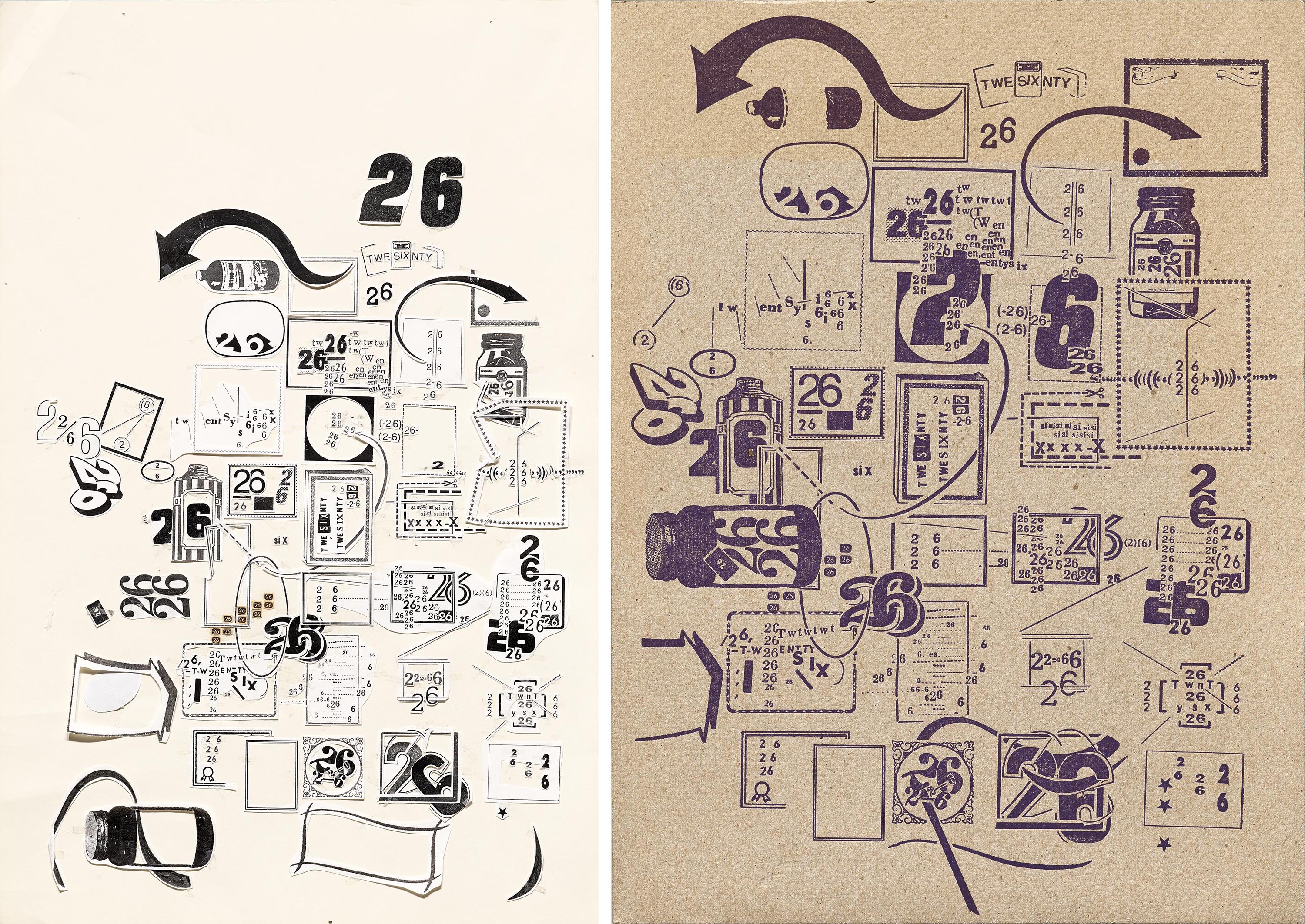
Since January 2025, Letterform Archive’s reading room has served as a display case for small, short-run exhibitions. Our eighth show, Martin Venezky: Process Work, explores an intrinsic but lesser known aspect of Venezky’s creative practice: a body of collage and photographic work that exists as a byproduct of “finished” graphic design objects. This process work is the physical embodiment of the rigor and devotion Venezky puts into his craft, giving viewers a peek into how he creates his signature typographic compositions. The show highlights our rare collection of the artist’s process materials and underscores the Archive’s commitment to providing open access to both design artifacts and the creative practices that inform them.
The gallery features over 50 images made between 1990 to the present, including a donation of photographic experiments from Venezky’s personal collection. To celebrate the Archive’s first exhibition of this generous gift, Associate Curator of Exhibitions Jon Sueda spoke with Martin Venezky.
Jon Sueda: Most people do not know that I was your student at California College of Arts and Crafts in 1995 and your first assistant from 1997 to 1999. Your assignments encouraged an idiosyncratic approach that was completely antithetical to all the other classes I was taking. As your assistant, I got to see your working methods up close and I was always blown away not only by your exceptional hand skills, but the extreme labor it took to achieve one of your pieces. At that point, a lot of your process involved collage, and you would often spend days and even weeks on a single composition. This process work can be best described as obsessive, layered paper assemblages held together by ordinary clear tape. I call them 2½D—they are not quite 3D, but have a sculptural quality that can only be appreciated in person. You would then scan these collages, flattening them into a digital space, and use the computer to add color and sometimes an additional layer of photography or type. The Archive is so fortunate to have both your process work and finished pieces.
To start, I want to prompt you with some different terms that graphic designers typically use to describe the design process. Could you respond with what each word means to you?
Martin Venezky: Yes, our relationship goes back a very long time. I am amused that you are beginning this interview with these prompts. You know how to get me agitated! As you suggested, my process is different from what is typically advocated. Looking back, I can see more clearly that I devised it to take advantage of my own peculiarities, and as a workaround for my own perceived deficiencies. That is a natural way to develop a working method, but it is not teachable. What I have tried to do in the classroom is offer alternatives so students can learn to adjust their methods to suit themselves. So my responses below aren’t for everyone!
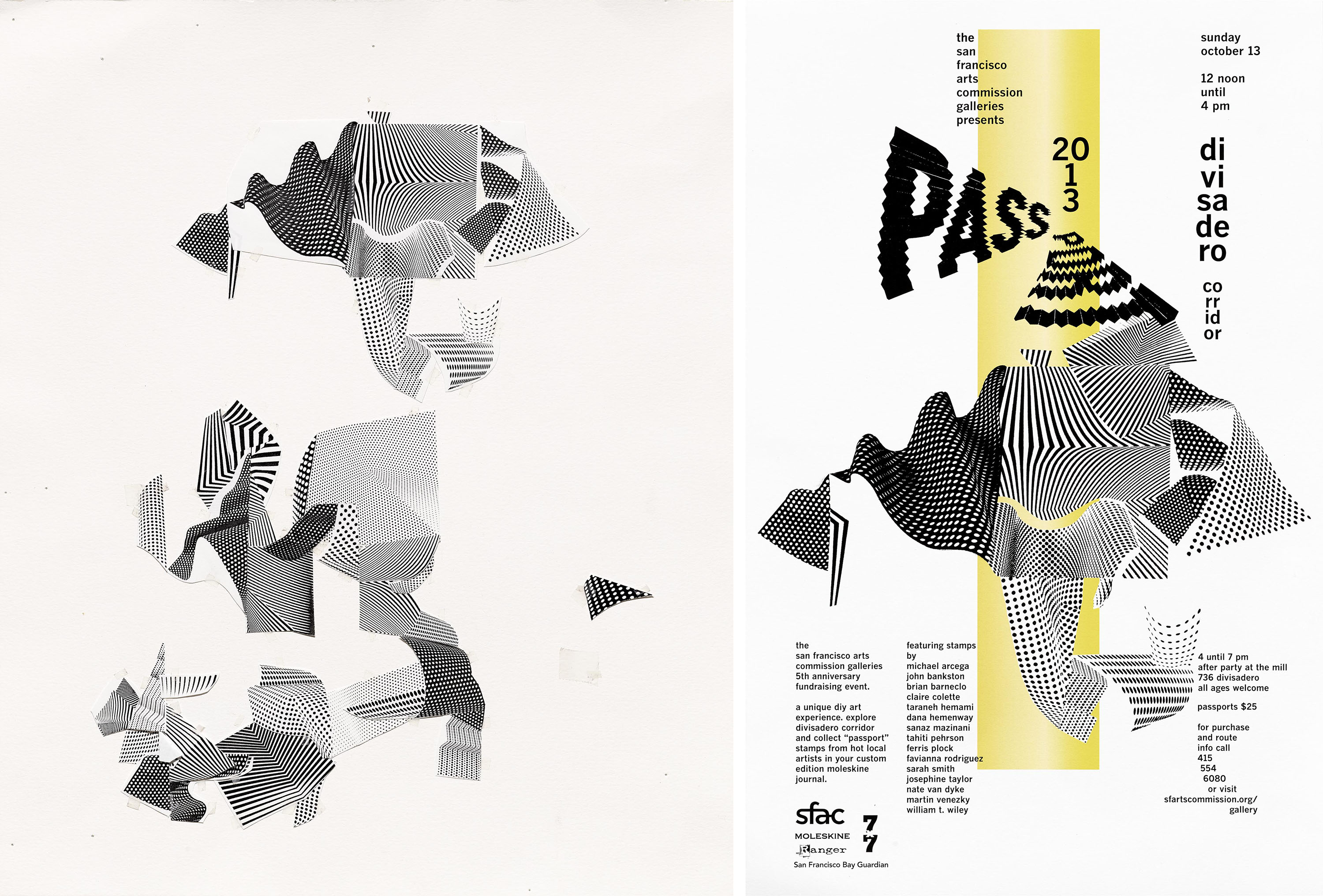
JS: Brainstorming.
MV: You know how I hate that word. Some people are great at this. They are usually the loud, clever ones. That’s not me. I would rather “material-storm,” that is, gather objects, materials, pictures, and begin intersecting them to see what happens. I like to observe rather than imagine, and that’s when most of my ideas come to me.
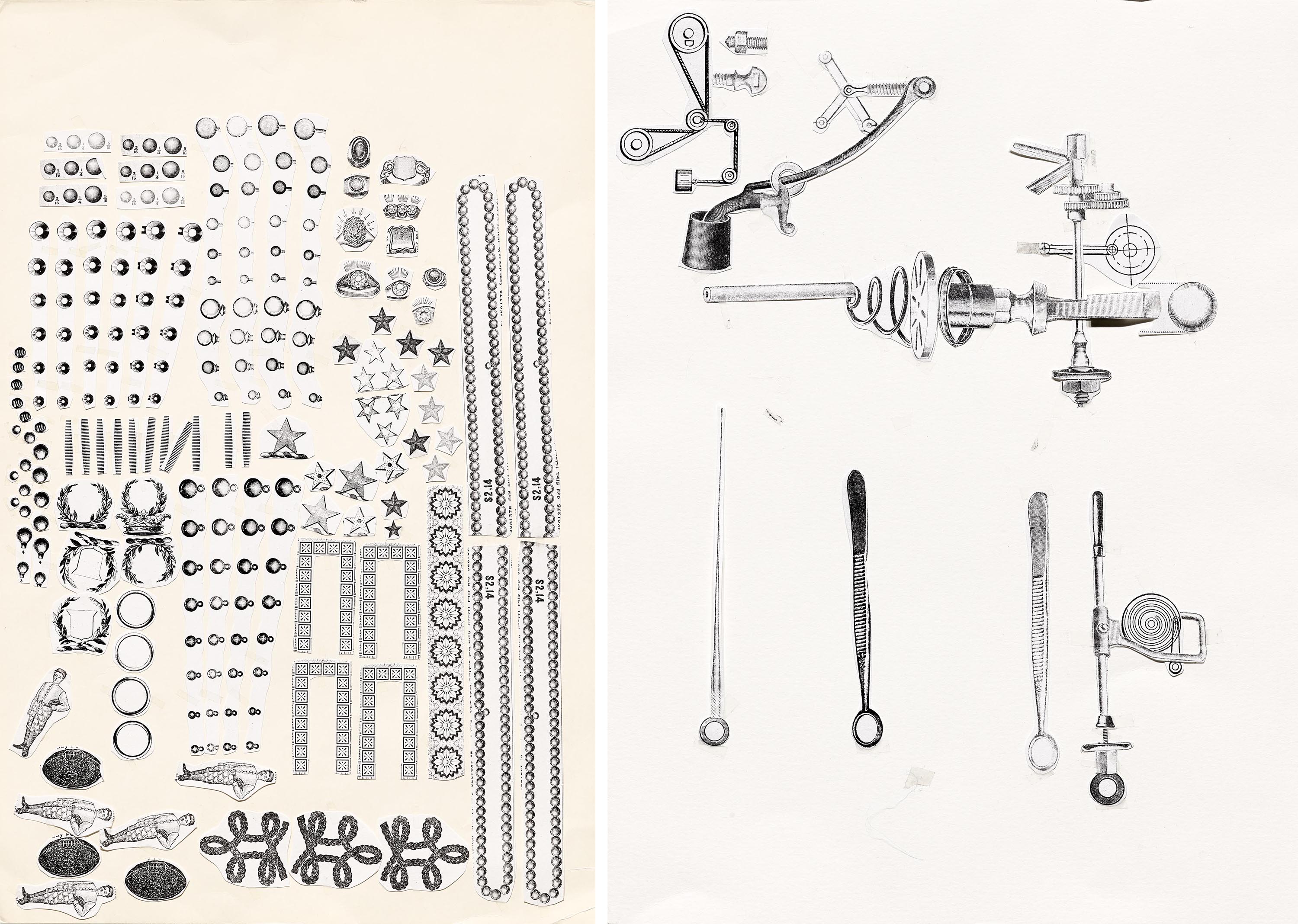
JS: Research.
MV: There are many kinds of research, and I know that the design industry champions user- and customer-driven research by employing surveys, interviews, and behavioral observations. That all is fine, but that isn’t everything. There is also formal and material research which, for my work, is equally important. Most of my projects have been book designs, which, except for the covers, have never required consumer research. But there is plenty of research required in reading and understanding the text, considering the materiality of the book as an object, and formal codes and symbols within the design.
JS: Concept.
MV: Concept is fine, but it does not have to lead the design process. If I have a concept in mind, it is usually about a process, not a solution. With much of my work, I begin with a collection of materials, images, and objects and let whatever concept evolve from what I observe and document. I often say that concept is overrated, especially in education. Too often it is a factor of cleverness, and any cleverness I project is inadvertent and unplanned.
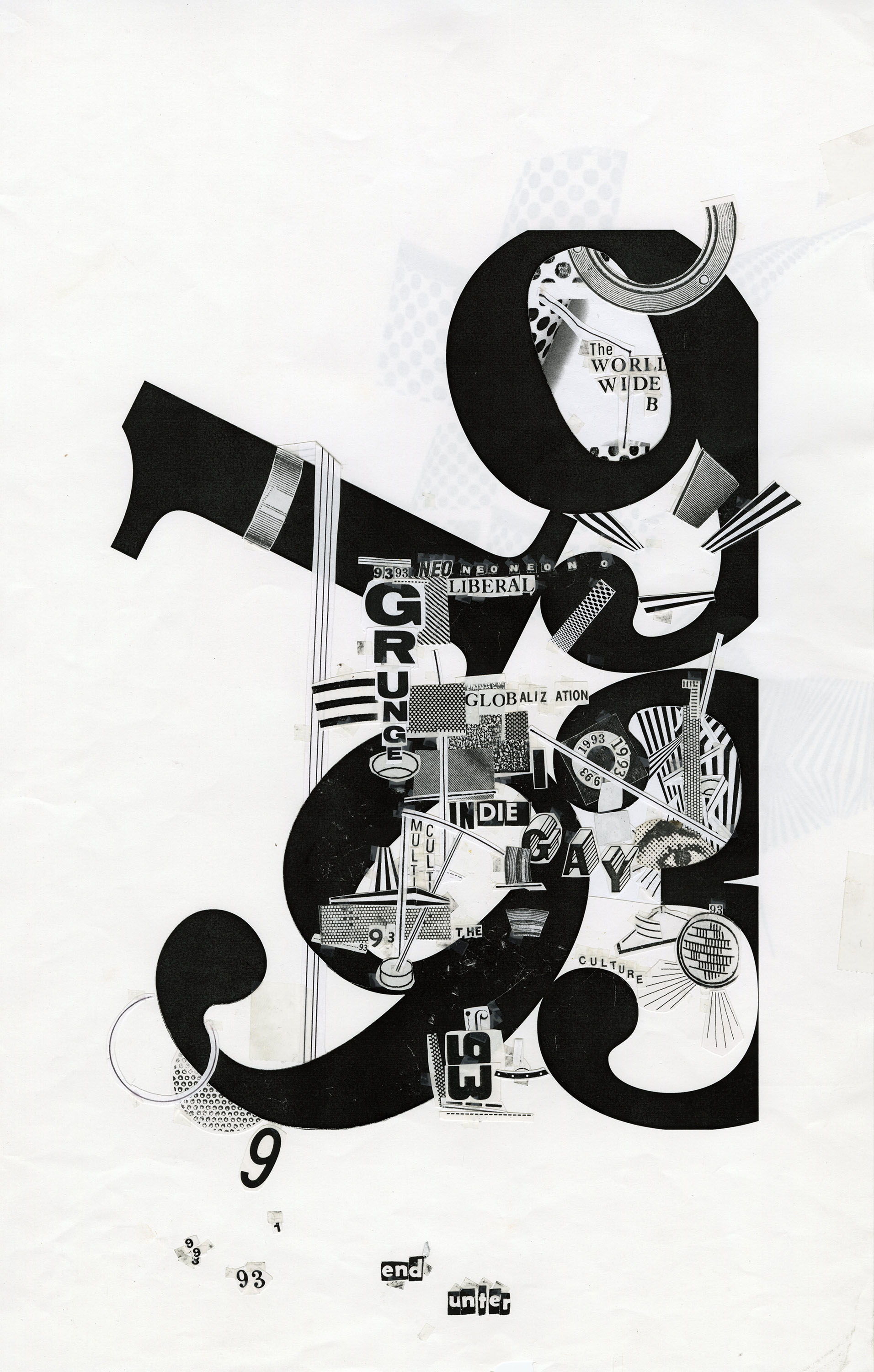
JS: Sketching.
MV: I never sketch out thumbnails of an imagined final design. My work simply cannot be sketched out ahead of time. The results have always come from working with materials and processes and carefully observing them. I know that some designers are good at sketching and at predicting results, which they can then create. That's not me. Some film directors plan out every detail of every sequence, while others prefer improvisation. I am the latter. I do use drawing as one of my methods, but again, I try not to predetermine how a drawing will look. Instead, I adjust as the drawing develops, and seek out other materials or obstructions to keep the final result unpredictable.
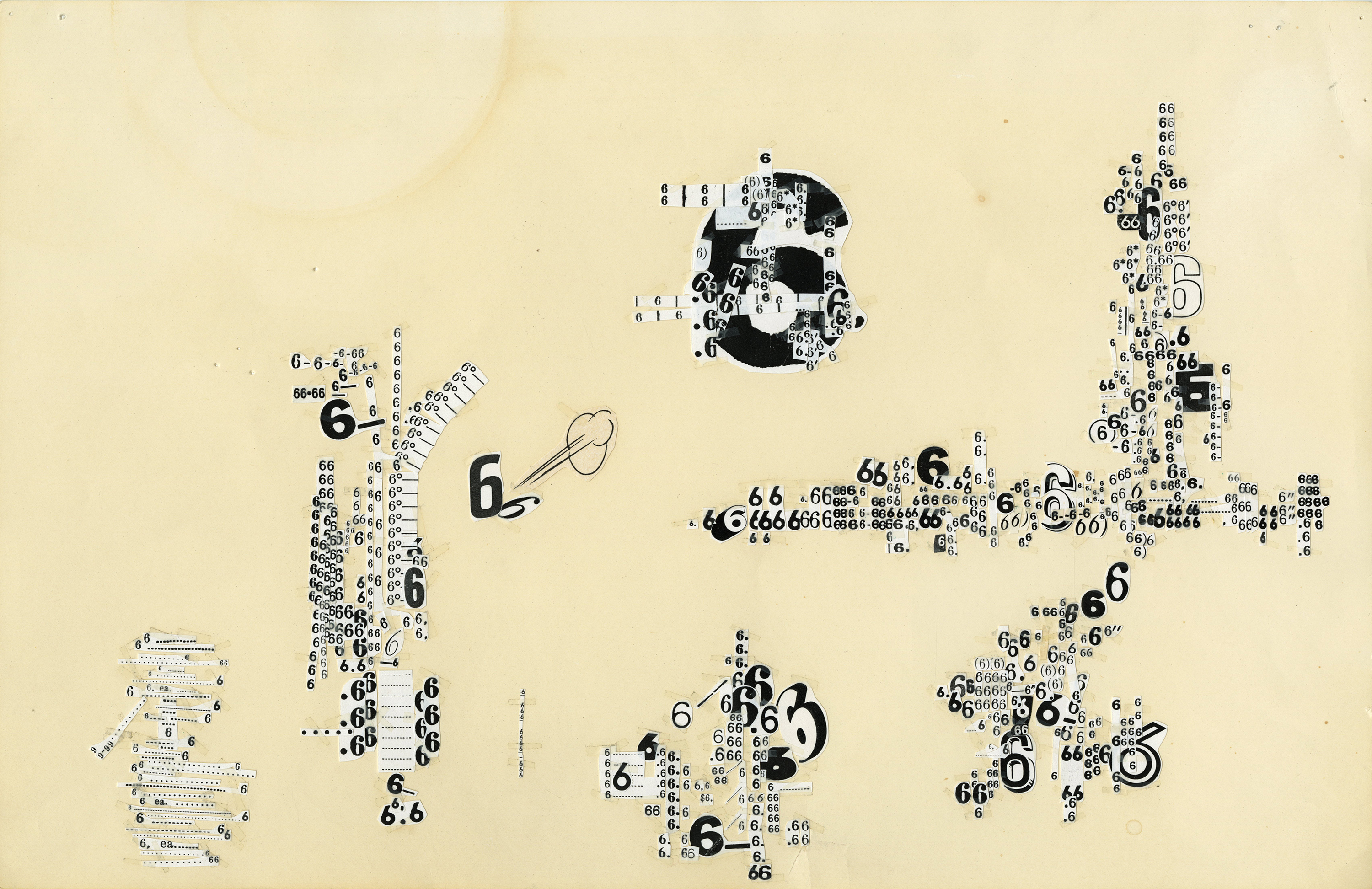
JS: Execution.
MV: Execution is everything! I’ve always been suspicious of those who can vividly describe an exciting process that generates exceptional results. But you never really know until you begin the work. I enjoy that part so much, even though the work itself never goes as planned. It is thrilling to adjust the process as you make discoveries; the work becomes a conversation between you, the materials, and the results. None of that can happen until the work actually starts.
JS: Refinement.
MV: I take an iterative approach to design. The work becomes an extended series of results, analysis, and decisions. As the work takes shape, I become more aware of nuance and detail. This is true for every kind of project; illustration, photography, typography, and book design. One of my complaints about design education is that students are never given enough time to reach this point. Projects move too quickly, with rapid deadlines that never reflect design as an art, but as a business. It takes time to understand nuance, especially for a student who is just learning the skills.
JS: Production.
MV: I usually like to do my own production so I can see each project through to the very end, from the first meeting through the final press check. That is harder to do today since I’ve never learned the necessary skills for complex digital production. But then again, I’m not usually involved in digital work. My mind is always thinking in terms of production for the printing press, and I still think in CMYK rather than RGB! Your last three terms, “execution,” “refinement,” and “production” are all intertwined for me. I am still refining even in a project’s production stage.
“One of my complaints about design education is that students are never given enough time. … rapid deadlines that [only] reflect design as a business.”
JS: In your responses you have referenced “material research” which exists mainly in science and industrial design, and “improvisation,” an approach often used in performance and film.… Did you intentionally look toward other disciplines to inform your process or did you make those connections after the fact?
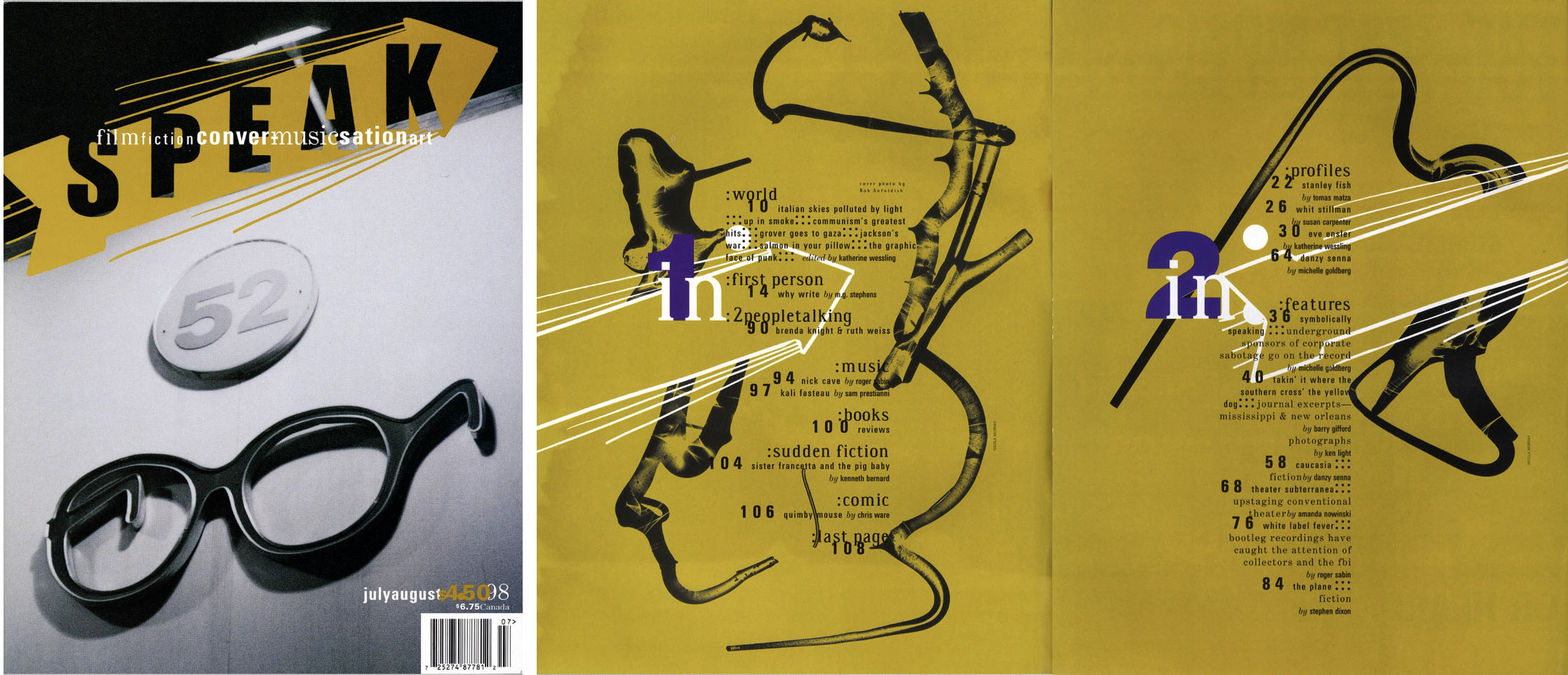
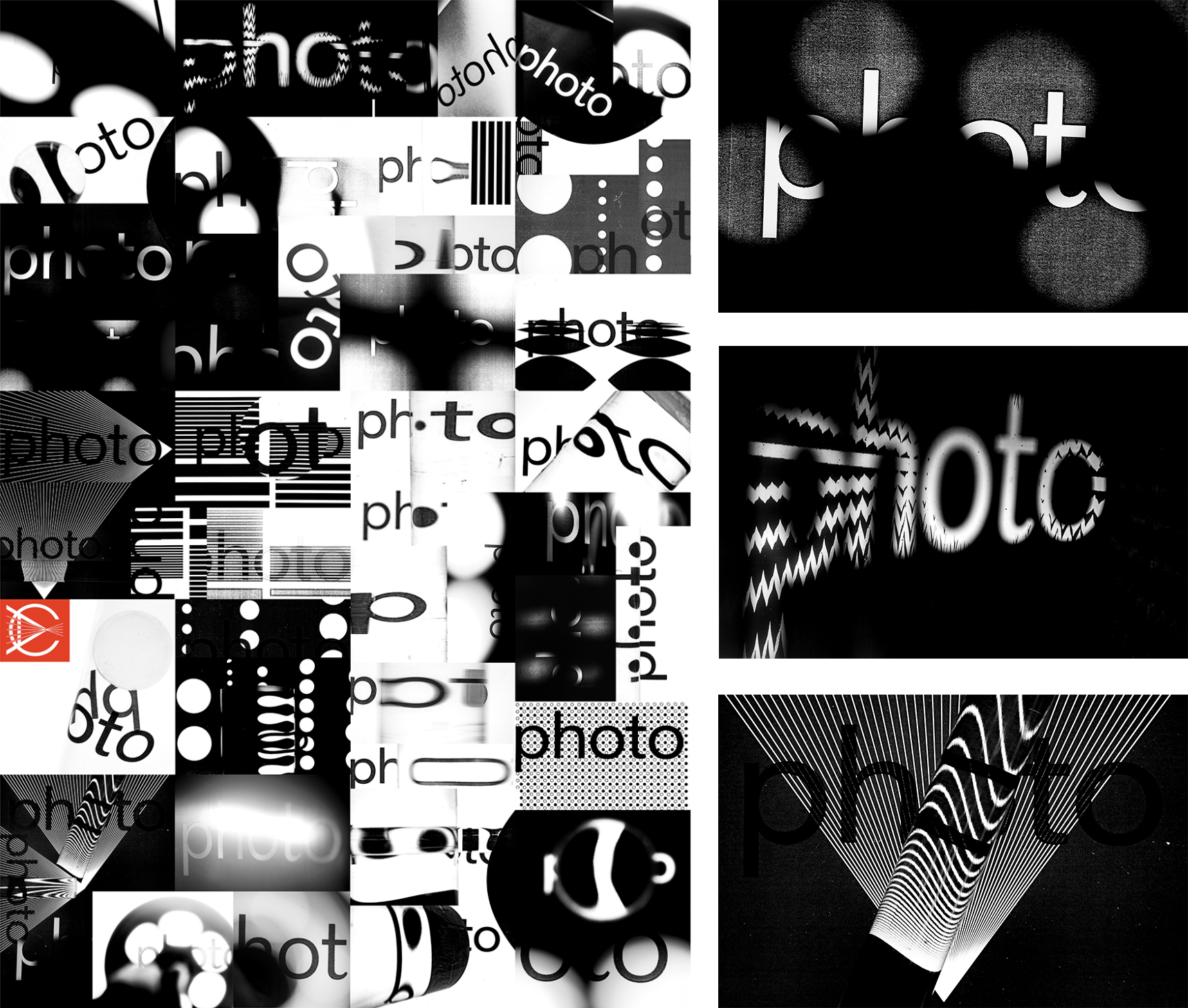
MV: My interest in materials began with the typography I created for Speak magazine in the 1990s. I was interested in intersecting letterforms with photography (I still am!). It seemed obvious to me that the best way to experiment with that would be to consider type as material. I would then use the camera to observe how the material reacts to light as well as any number of other elements. Those studies have led to almost everything else I have done. And the work I am doing right now is a direct result of those early experiments. You had firsthand experience with that when you worked for me in the ’90s. I think you were the first person I worked with who actually understood and was as meticulous as I was!
Although letterforms themselves are a kind of abstraction, I gained a new appreciation for the importance of abstraction and sensation when I worked on the Searchlight: Consciousness at the Millennium catalog for the Wattis Institute at California College of the Arts in 1999. The importance of direct sensation was paramount to the writing, artwork, films, and lectures that surrounded the exhibition, and I gobbled it all up. That led to my formulating Form Studio as both an undergraduate and graduate class.
It was only at this point I really paid close attention to how materials are used and studied in other disciplines.
JS: I wanted to add the term “flow state” to the lexicon we are documenting here. I’ve used this term for years in the context of sports. You reach a flow state or fall into “the zone,” where you are performing at the highest level and not thinking about what you are doing because you are immersed in the moment. Looking more into this term, it actually comes from psychology and was officially named by psychologist Mihaly Csikszentmihalyi in the 1970s. Csikszentmihalyi first saw this phenomenon while observing artists who became so engrossed in their projects that they ignored food, water, and sleep. To me this completely describes the way you work! Is there such a thing as a flow state in your process?
MV: I wish I could say that yes, I am always in that state when I work. I think it was the case throughout the 1990s before the internet and mobile phones became so distracting. These days I have so many competing projects, curiosities, and distractions that it is hard to achieve that mental state. There are two situations, though, that always bring me there. The first is drawing in my sketchbook during a long flight. When I put on headphones, I completely lose myself in the markmaking since there are few chances for interruption. The other time is when I am assembling one of my large photo constructions in a gallery space. I bring thousands of images with me into the space along with a bucket of pushpins and for the next several days I am completely immersed in slowly covering the entire wall. And yes, you were the first person to commission me to do this for your All Possible Futures exhibition in 2014. At the time I didn’t know if it would work, or how I would feel working in front of others. But after that first experience, I jump at any opportunity.
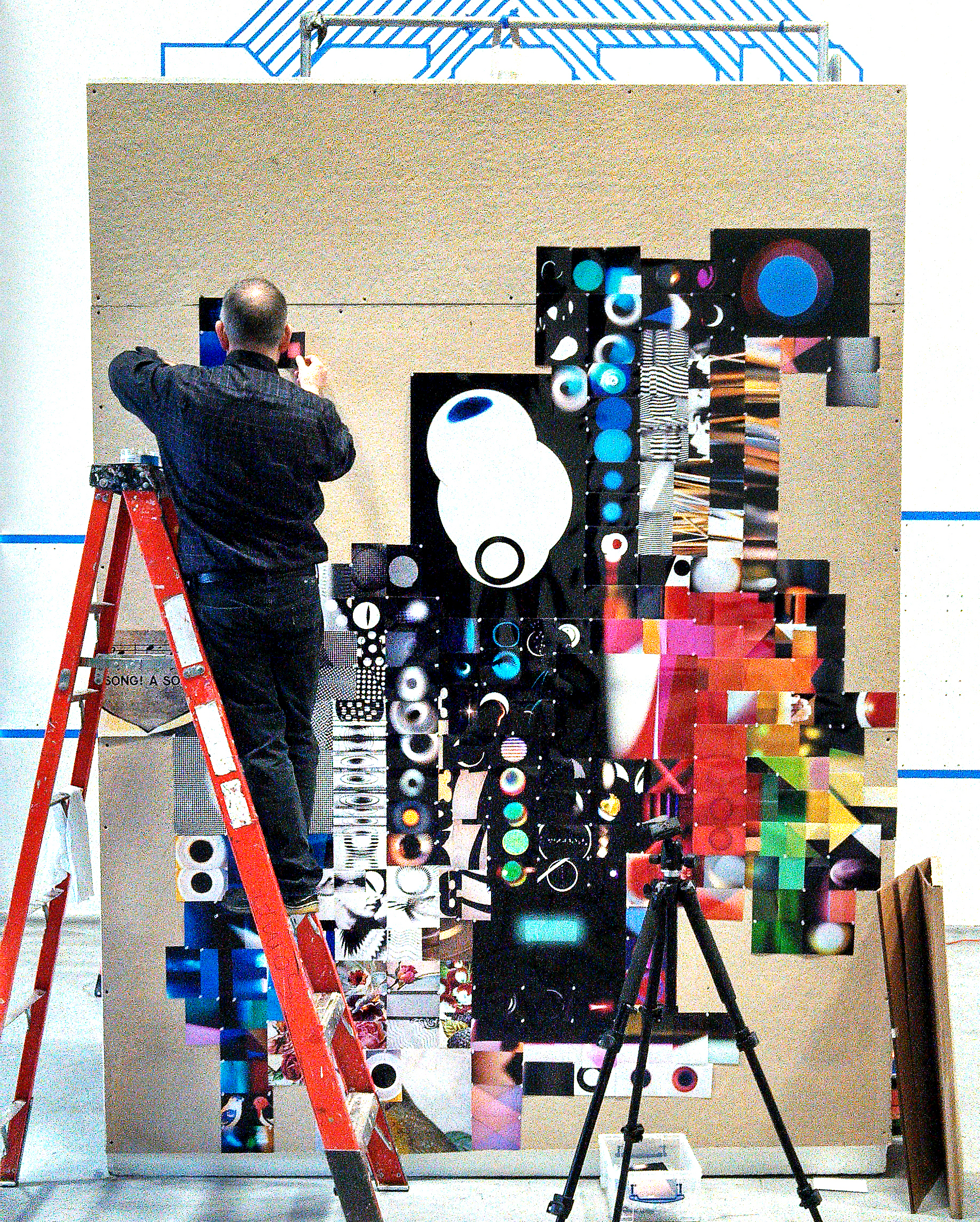
digital photo prints adhered with pushpins to a free-standing wall, SOMArts Gallery, 2014
I am about to begin a four-month residency at Central Michigan University. I am hoping to use the time and studio space to bring myself into that state of pure making and observing.
JS: Photography has become an important part of your process in recent years. You’ve always used photographic processes in your work, but recently you returned to graduate school at Cranbrook Academy of Art to get a Masters Degree in Photography. Why was going back to school a next step for you, and what properties does photography offer compared to collage?
MV: In my recent work, photography and collage are one and the same. Everything centers around disparate objects being brought together, either as abstract forms or a curious interplay, either in front of the camera (as in a still life composition), or made from a massive number of photo prints. I have also been incorporating digital manipulation into the work as a further complication.
Although I had been working a lot within photography on my own, and especially during the COVID-19 lockdown, I found that it was hard to develop a trajectory of discovery that didn’t seem arbitrary and went beyond what I already knew how to do.
During a Zoom chat with my friend and photographer Andy Mattern, we joked about my returning to school. (He had an MFA in photography, and considered it invaluable in his ability to create.) But the thought persisted long after that conversation. I knew how absolutely critical my first MFA experience had been in developing my practice. And so, I began to tentatively inquire about school at my age (I would be turning 65 at enrollment), which led to an application and, finally, the big move to Michigan.
Was it worth all the effort, time, and expense? Absolutely! Once again, the experience propelled my work forward with the freedom to wander into new areas that had been closed off (drawing and digital manipulation, for example). I know that there must be many other older people who assume that the possibility of school is well behind them. Either they began an art career which they set aside for other reasons, or they have made significant work in private but don’t know how to elevate their practice. I wish art schools made an effort to recruit older students who may now have the time, desire, and income to take such a leap forward.
“The process itself is the concept.”
JS: You recently sent the Archive hundreds of photographic experiments that you created for several design projects. People only see these pieces in their final state and don’t have a sense of the meandering journey you took along the way. For those who have not been exposed to your methods, they might think this is an easy, efficient process and that computer filters or generative software might have a hand in it. With the photography work, viewers don’t see the thousands of iterations it takes to come up with the design components. There is certainly an unmatched work ethic here, but it’s more than that…. I deeply admire your dedication and I think this process work can stand alone as something equally important as the final works themselves. What would you like people to take away from experiencing your process?
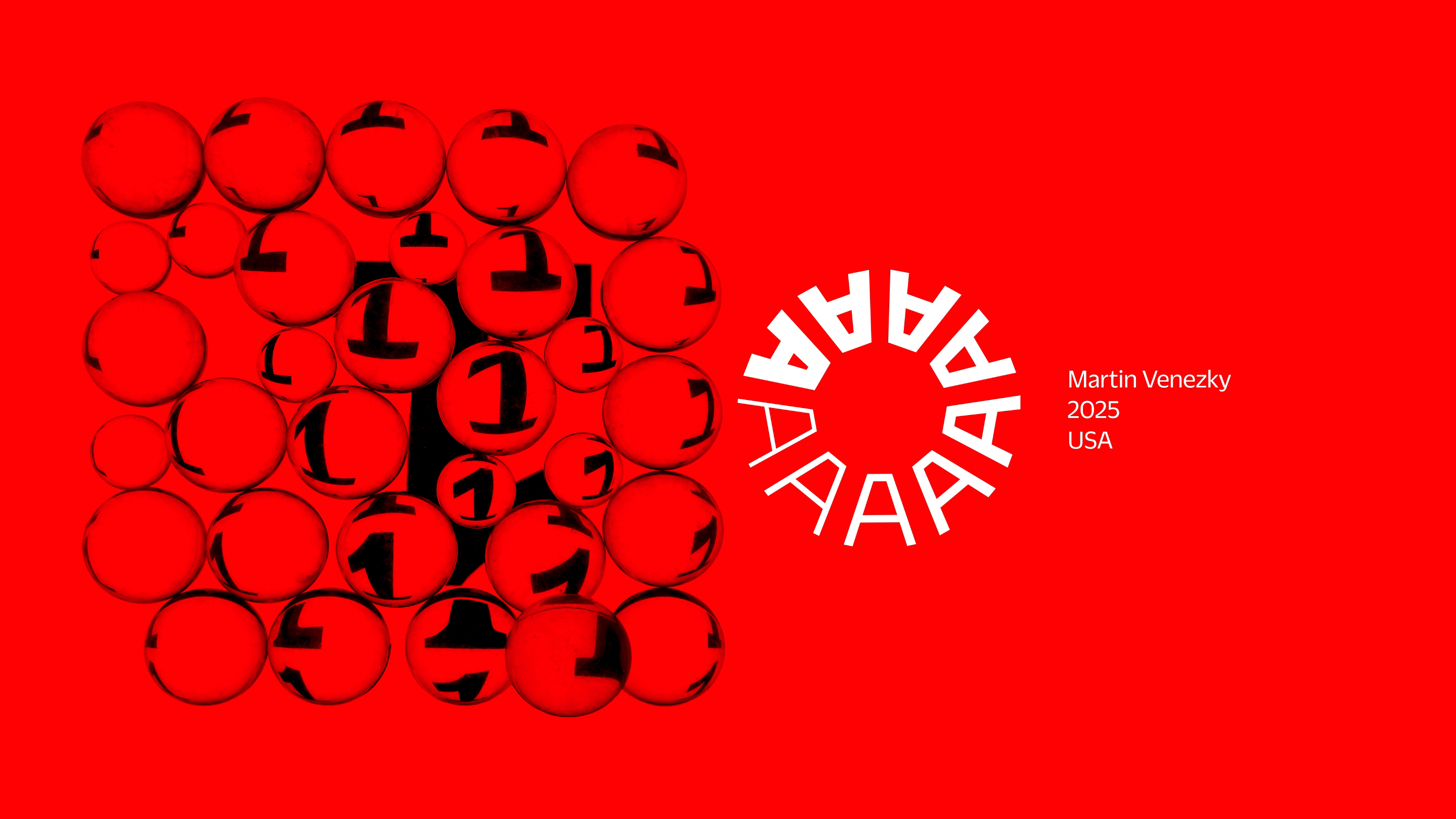
All images in the gallery below are hi-fi captures. Click an image to enter fullscreen view, then click or pinch to enlarge.
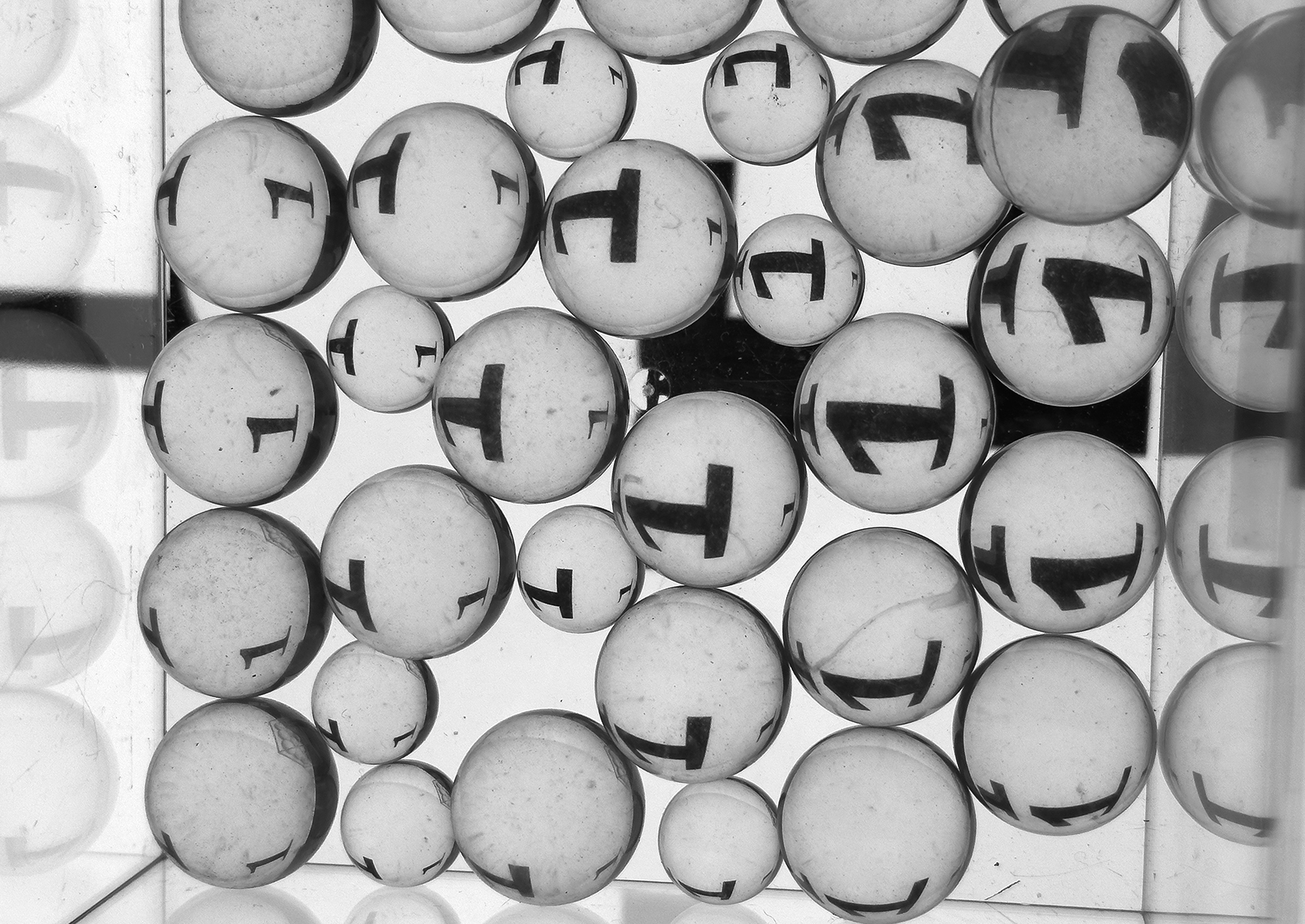
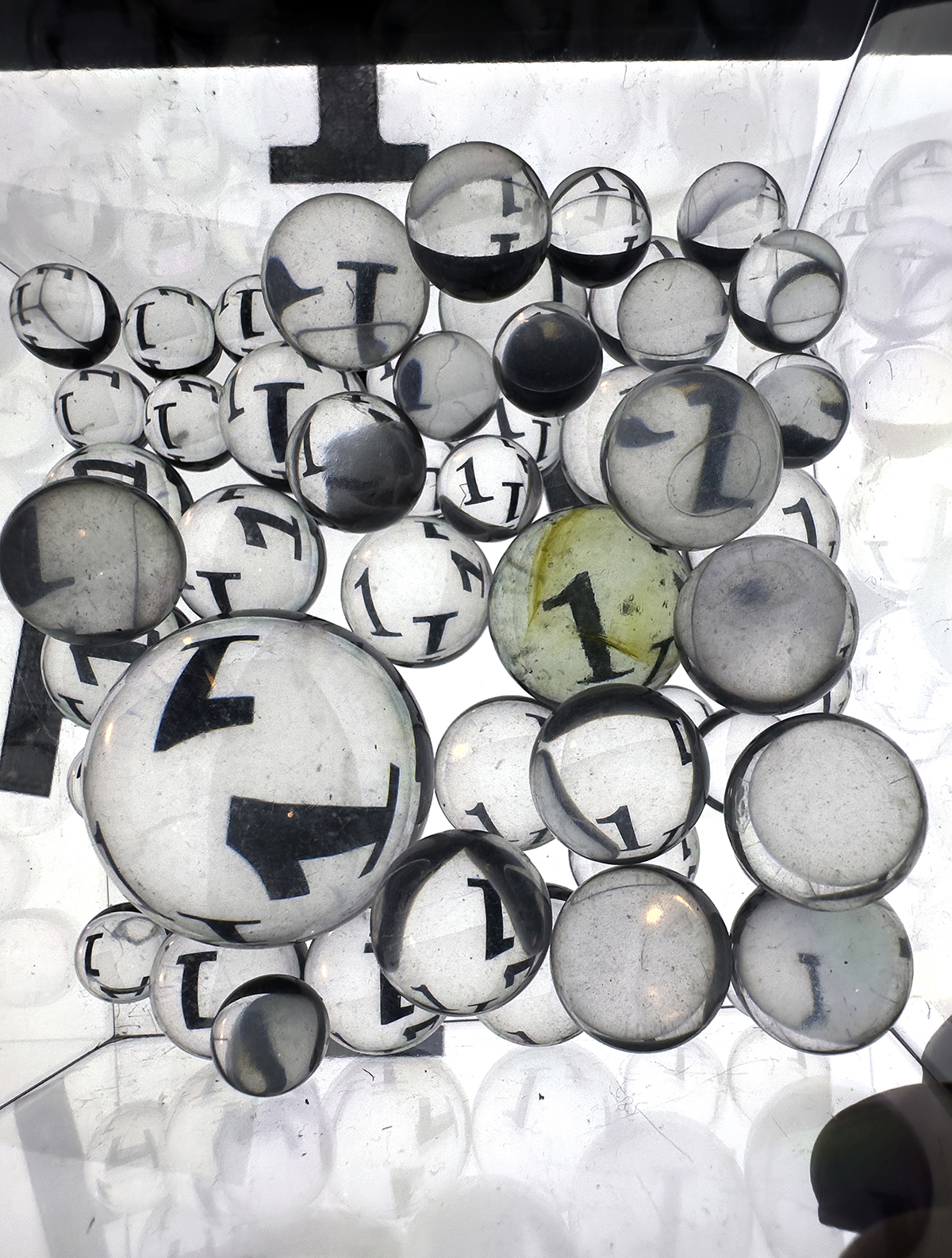
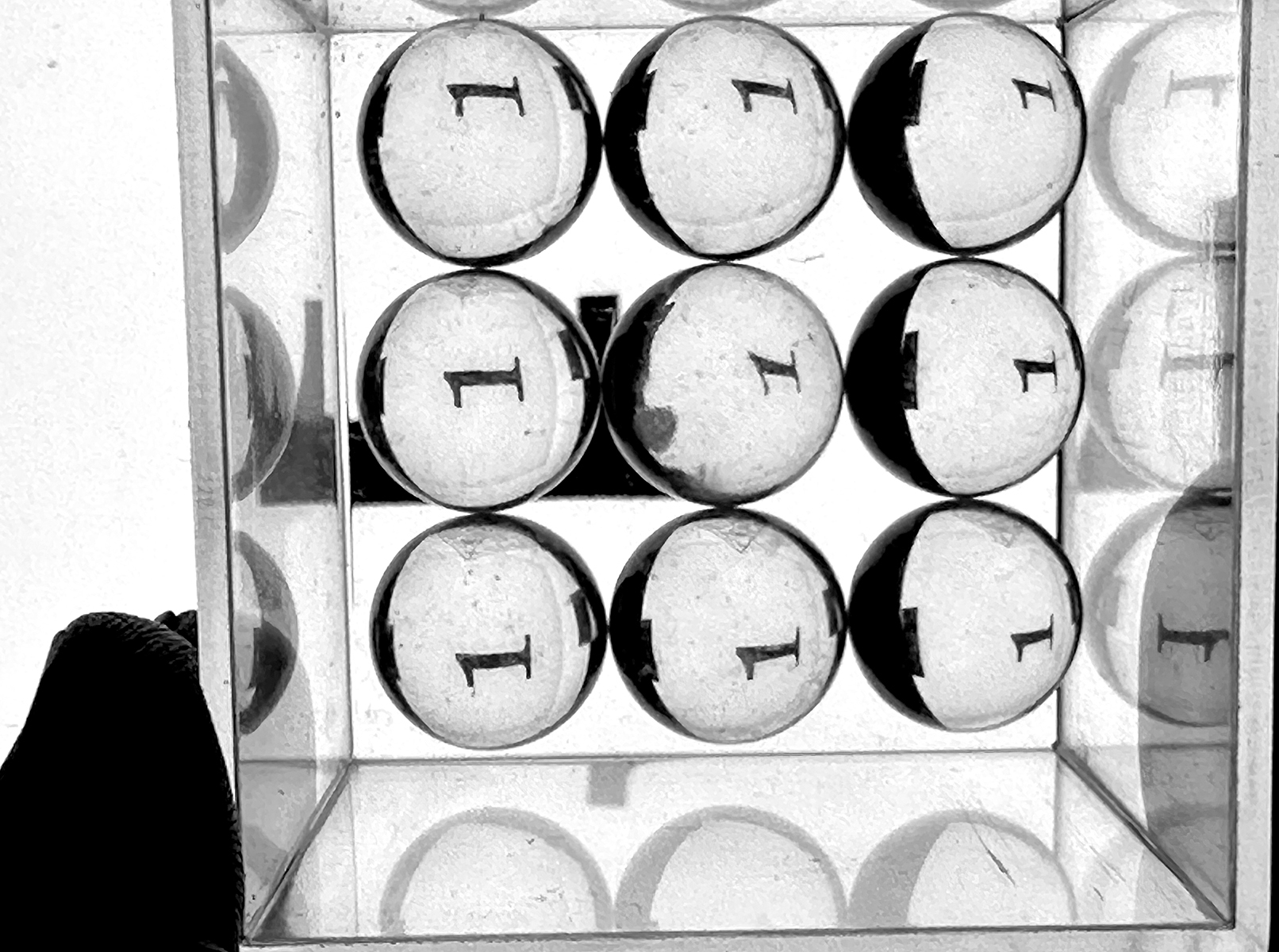
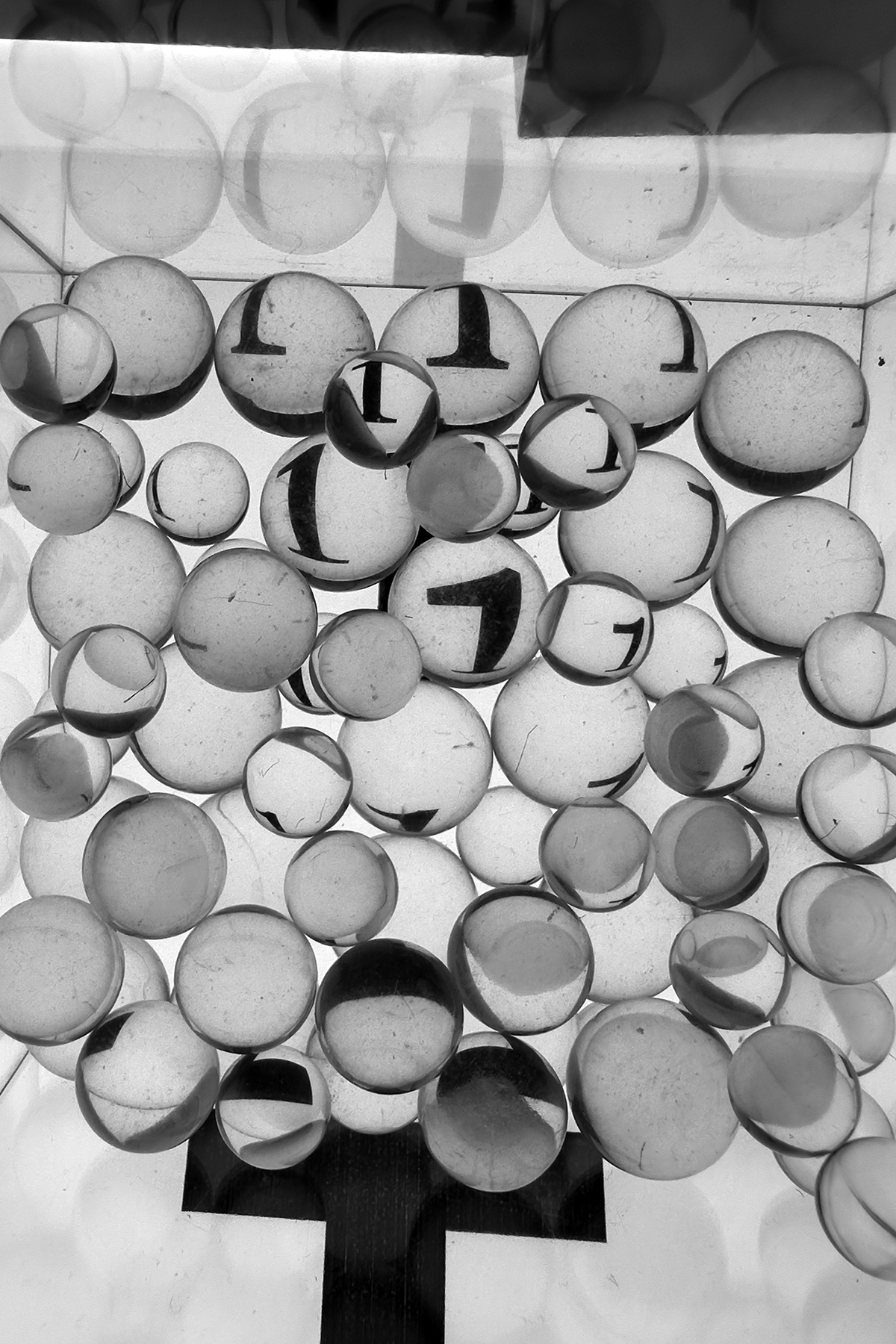
MV: Well, first, I’m surprised that anyone would see the final work as easy or efficient.
The process itself is both simple and difficult in different ways, and it is definitely not efficient. It’s simple because there isn’t a separate, clever concept involved. The process itself is the concept. There is no meaning beyond the pleasure we get from experiencing the work and the variations within it. That’s plenty for me. It's also simple because I intersect the most basic materials with pieces of type. There are no computer tricks, no Photoshop effects. The magic resides in the physical properties of the material and the camera’s unique power of investigation.
The difficulty comes from the process’s very inefficiency. From maintaining the inventory of materials, the photography, editing, and indexing, to the actual designing and production. It’s a lot of work, and most people would resort to shortcuts. In my opinion, speeding up the process ruins it. It’s all worth it, though, because the result is something I couldn’t have created any other way.
I never intended for the individual photographs to be considered as their own works. I suppose that has given me the freedom not to concern myself with any single image. I’m happy you see them that way, though, and I’m fine if others enjoy the working materials as much as the final product.
—Jon Sueda, Associate Curator of Exhibitions