News
A Primer on Letterform Archive Books
Revenue Director Grace Tsai reflects on what she’s learned about the range of titles published by Letterform Archive.
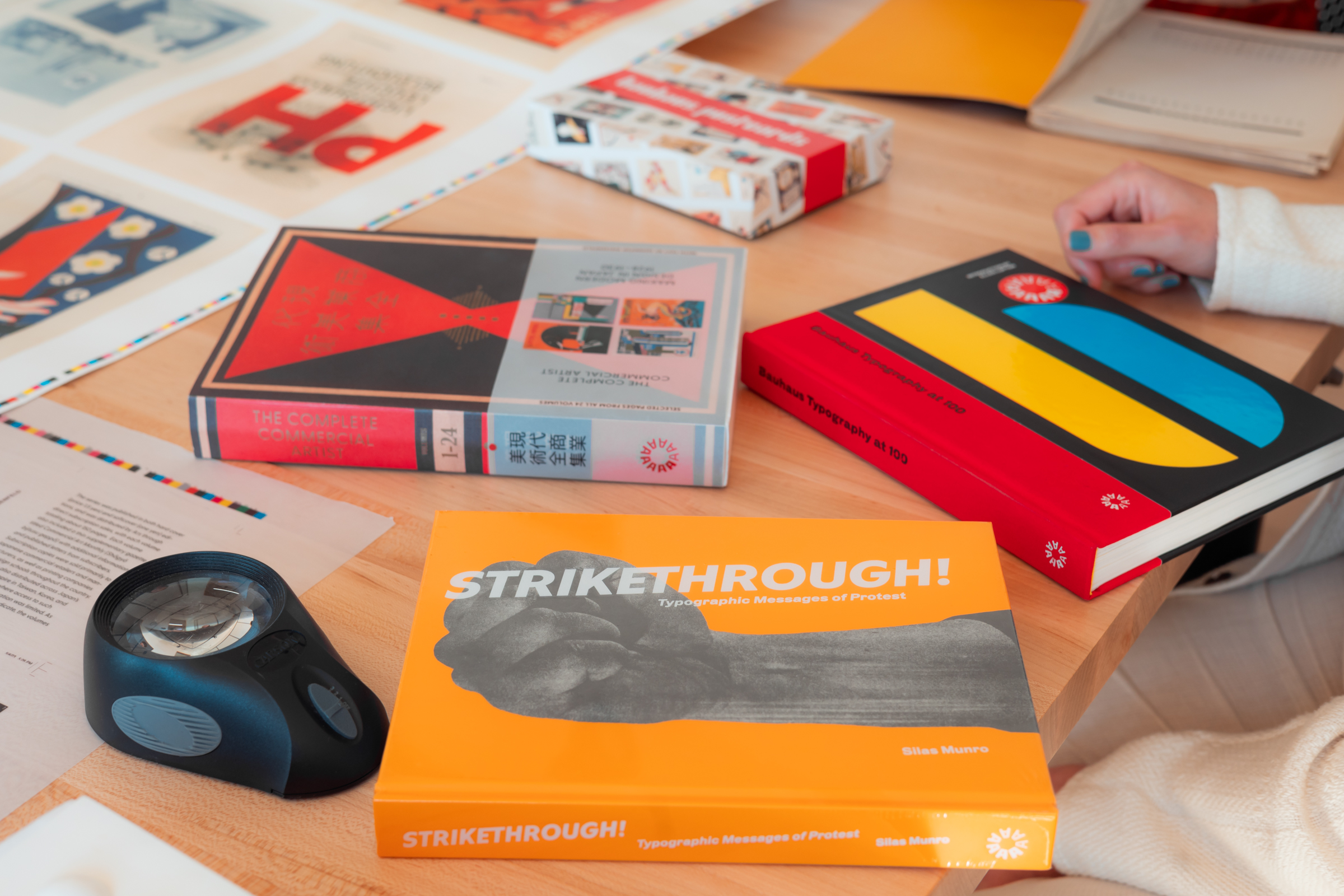
Letterform Archive is home to all who love great design. The Archive is also home to all of us who love letters, art, and books, and nowhere is that more apparent and alive than in our publishing program. I joined the Archive’s team as Revenue Director last June. Since then, it’s been a pleasure for me to learn not just about our immense collection, but about the exquisite books we publish. As a lay person new to the world of publishing, I’ve learned so much from our knowledgeable and talented Letterform Archive Books team, led by Lucie Parker.
Our publishing program allows us to share highlights from our 100,000-object collection. Our books play an important role in our mission to provide radical access to our collection, allowing people to take home high-quality reproductions of rare and inspiring objects. Letterform Archive is unique among other art institutions and libraries, as we have an in-house creative and editorial team that is able to cultivate knowledge of our collection and work directly with the materials.
“In each of our titles, our goal is three-fold,” Lucie says of Letterform Archive Books. “To offer faithful reproductions of our collections materials; to share the story of these materials with modern readers via rigorous editorial; and to honor the original creators’ vision while presenting their work in a contemporary design. With these goals in mind, we’ve developed different product lines to highlight the Archive’s various collections strengths and to delight as many readers as possible.”
To date, we’ve published 25 titles, all of which can be grouped into one of these product categories:
- Exhibition catalogs
- Facsimile editions
- Monographs
- Overviews
- Gift merchandise
Allow me to share more about the specifics of each category and what makes these offerings special.
Exhibition Catalogs
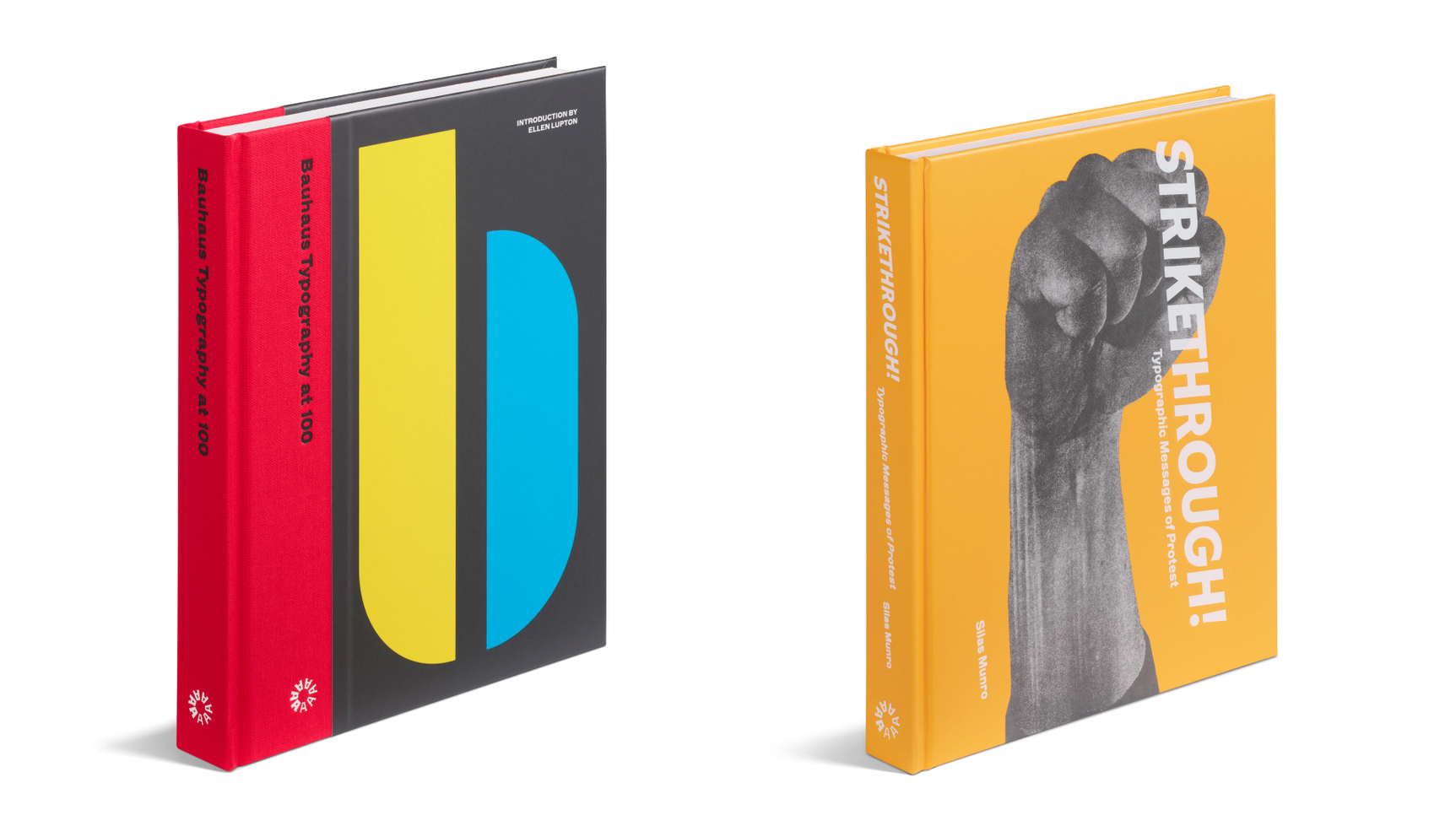
Our exhibition catalogs document the curatorial vision of our exhibitions program, detailing the objects on display in our gallery. Each book features roughly 150 works of art and starts with an introductory essay from an expert in that area, such as Ellen Lupton, who contributed the opening essay to our 2021 catalog, Bauhaus Typography at 100. Experts such as Lupton augment our in-house curatorial knowledge with additional expertise and help us tell a fuller story about the material. In addition to the exhibition catalog itself, we often also offer beautiful gift products as souvenirs of our shows, such as postcards or stationery. Everyone to whom I’ve gifted Strikethrough, especially anyone under 30, has thanked me profusely. It is a book for our time.
Facsimile Editions
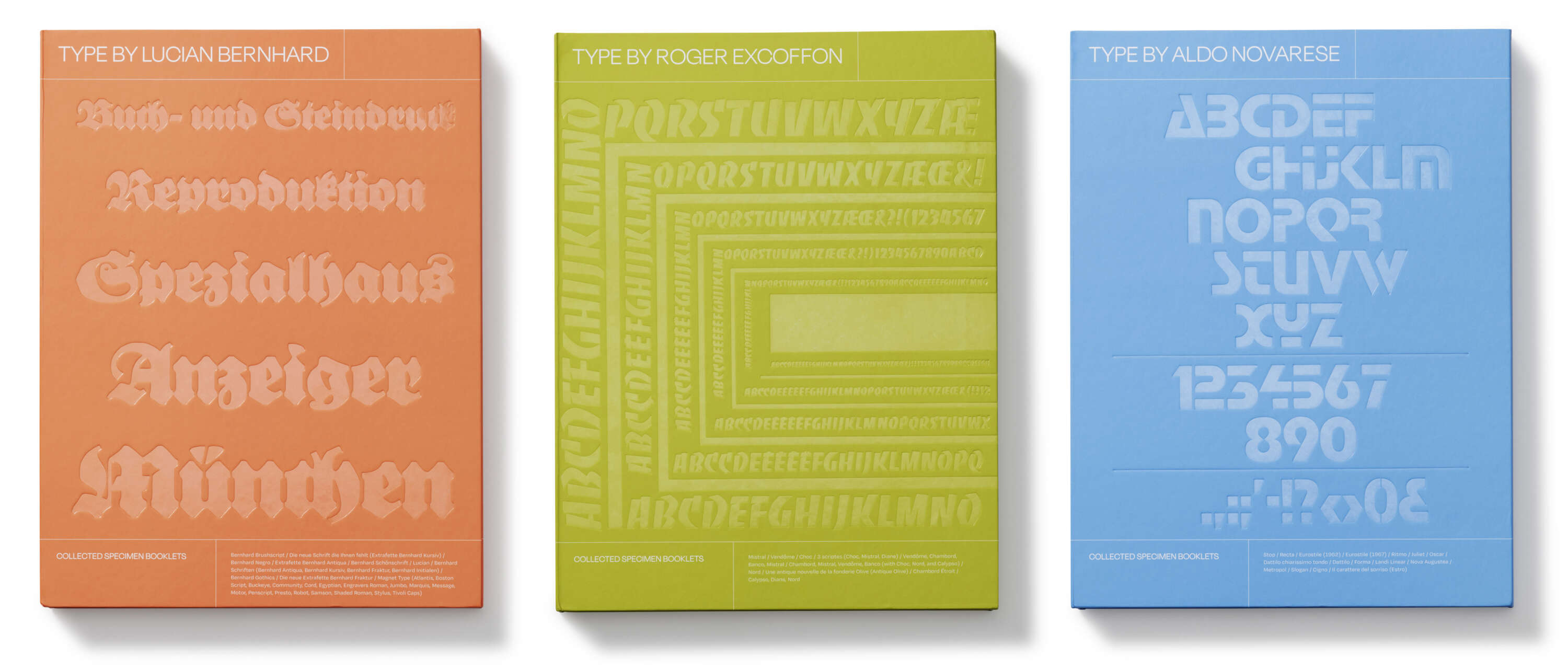
A facsimile edition is an exact copy of an original item. Our facsimile editions showcase significant items from our collection, reproduced in full at the original trim size and in full color. With in-house digitization and color correction, the quality of photography in our books is always amazing, but in our facsimiles, we go to maximum effort to match all aspects of the original. We also include original scholarship and translations so readers can learn about an object’s history.
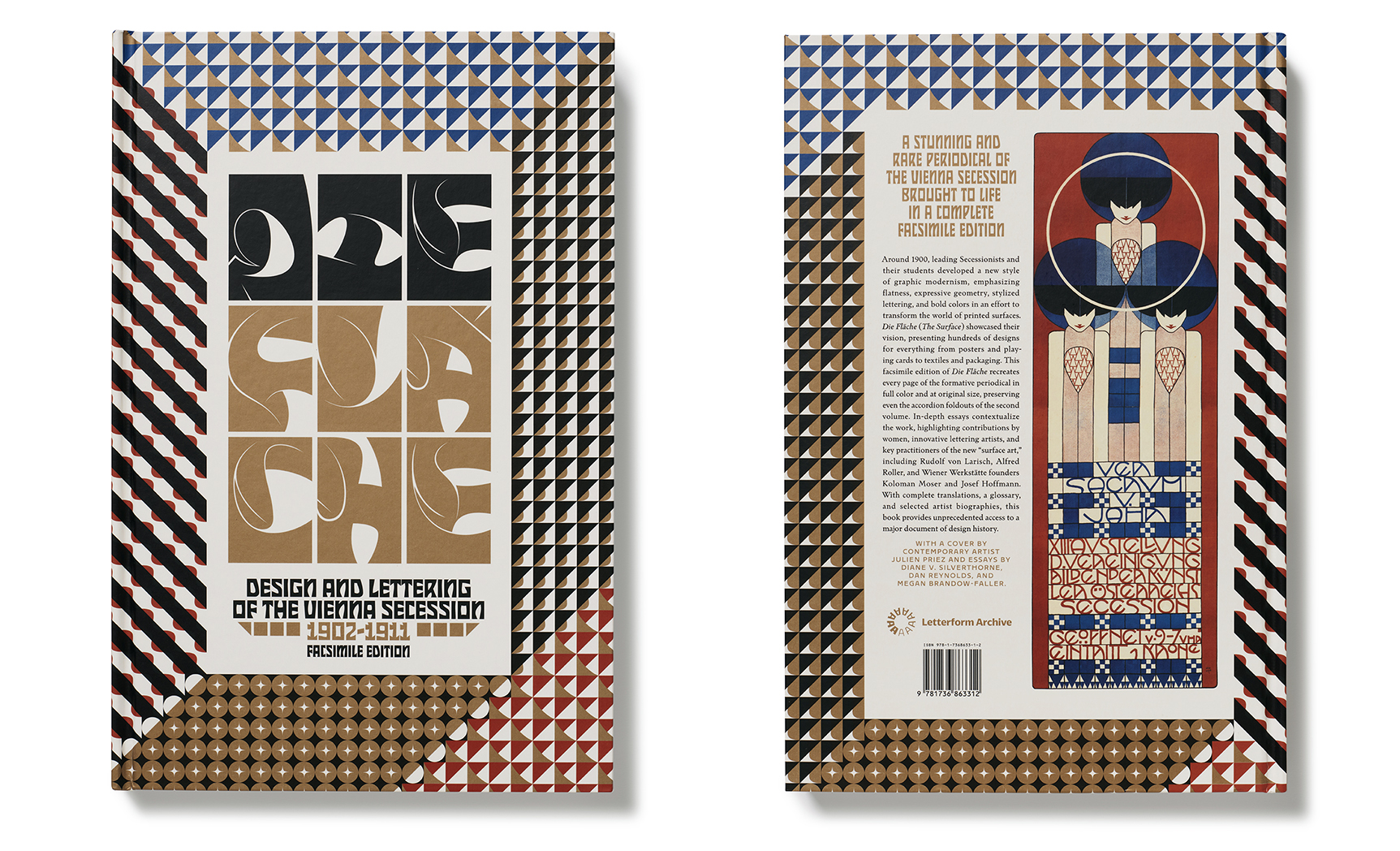
- Die Fläche (Facsimile Edition): Design and Lettering of the Vienna Secession, 1902–1911
- Type by Bernhard, Excoffon, Novarese: Collected Specimen Booklets (Bundle)
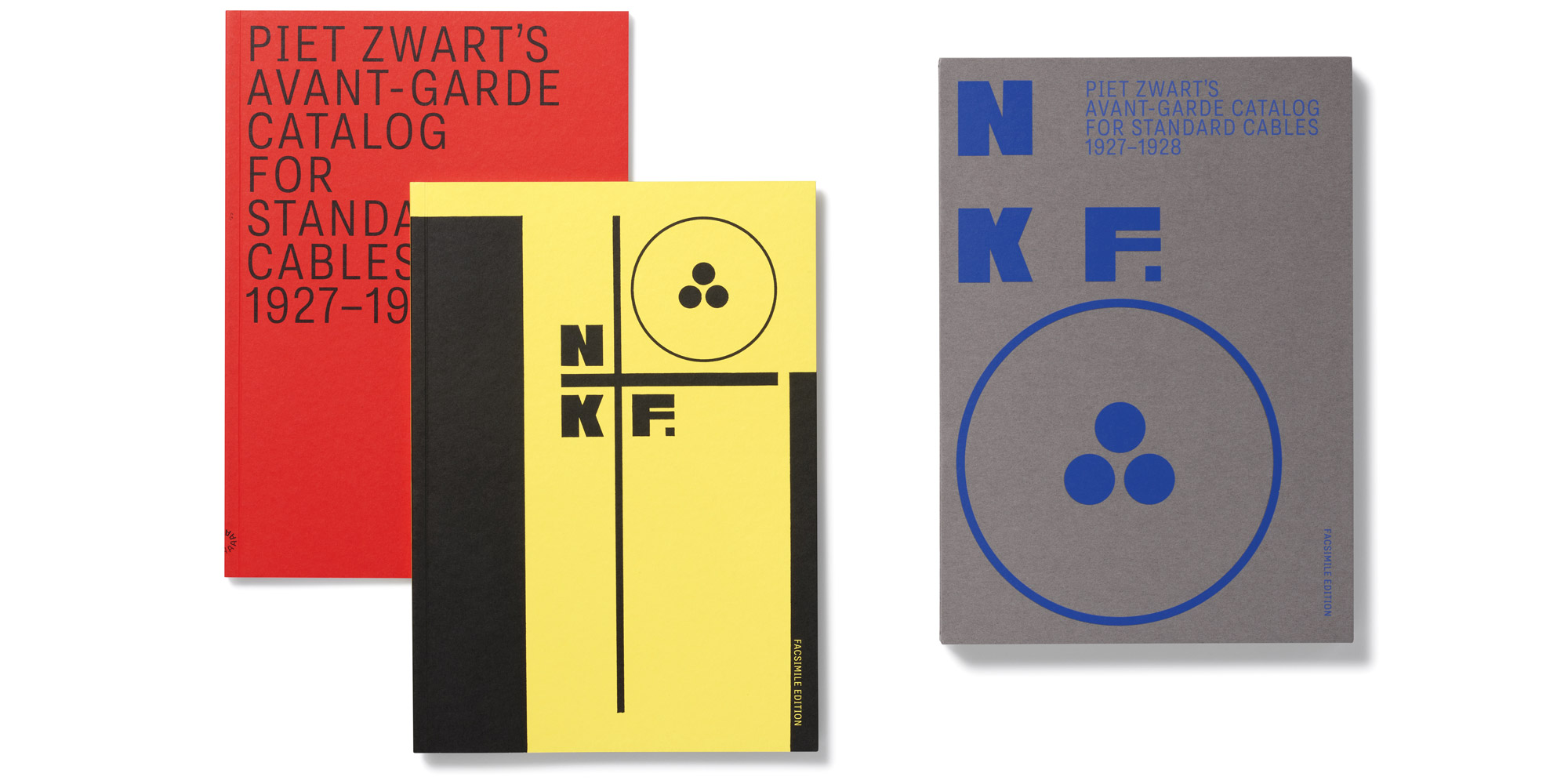
- NKF: Piet Zwart’s Avant-Garde Catalog for Standard Cables, 1927–1928
One of our most popular facsimile editions, and possibly our most gorgeous book, Die Fläche: Design and Lettering of the Vienna Secession, 1902–1911, brings to life a periodical of the Vienna Secession, an early twentieth-century art movement related to art nouveau that emphasized flatness, expressive geometry, stylized lettering, and bold colors. Die Fläche, which is German for The Surface, is a compendium of the two volumes of this periodical, which was published in 14 total issues between 1902 and 1911. In addition to dozens of vibrant designs for posters, patterns, playing cards, and more, Die Fläche highlights many artworks contributed by women at a time when early ideas of gender equality were beginning to circulate in avant-garde circles. The stunning pullouts in the back of the book preserve even the accordion foldouts of the second volume. You have to see how lovely this is in real life to believe it.
Another fascinating example of a facsimile edition is NKF: Piet Zwart’s Avant-Garde Catalog for Standard Cables. Essentially a sell-piece for an industrial product, this catalog was designed by Dutch designer Piet Zwart in the late 1920s for the cable manufacturer Nederlandse Kabelfabriek Delft (NKF). It is famous today for presenting technical material in a thoroughly modernist way. Its contemporary layouts, unique photography, and beautiful use of typography make it a jewel in our publishing program. As Letterform Archive’s founder and executive director Rob Saunders loves to share about the original: “One of the only times I’ve seen visitors to the Archive weep is when I’ve shown them this work by Piet Zwart.”
Piet Zwart is also the subject matter of the show currently being exhibited at Letterform Archive. You can catch the exhibition until spring 2026.
Monographs
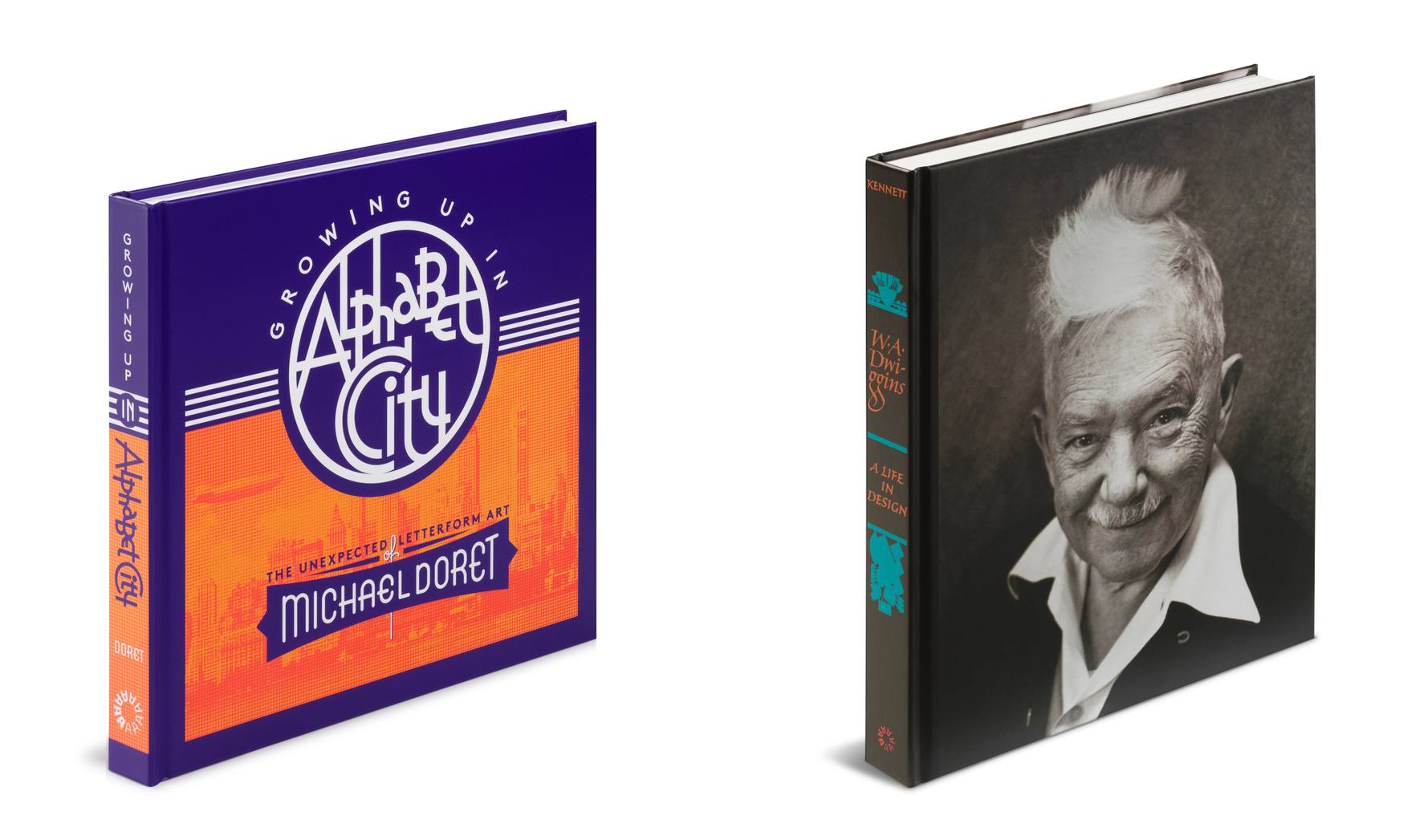
Monographs highlight individual designers and/or artists whose works are majorly represented in our collection.
- Amos Paul Kennedy, Jr.: Citizen Printer
- Only on Saturday: The Wood Type Prints of Jack Stauffacher
- Growing Up in Alphabet City: The Unexpected Letterform Art of Michael Doret
- W.A. Dwiggins: A Life in Design
As with our other titles, our monographs feature essays and scholarship from experts, photography of the designer or artist, and, of course, reproductions of the art itself. For example, Citizen Printer, our book on the work of letterpress printer Amos Paul Kennedy, Jr., opens with a foreword from New York Times–bestselling author Austin Kleon, includes essays by scholars Kelly Walters and Myron M. Beasley, and features reproductions of 800 of Kennedy’s prints created over the course of 35 years—some of which were freshly commissioned by the Letterform Archive Books team. As a proud member of “the school of bad printing,” Kennedy tells fascinating stories about how he derived his printing style from circumstances and what he had on hand, and tales about the prints themselves. The book also includes portraiture of Kennedy working at his press. Taken by Aundre Larrow, these images of Kennedy at play in his printshop perfectly capture his spirit.
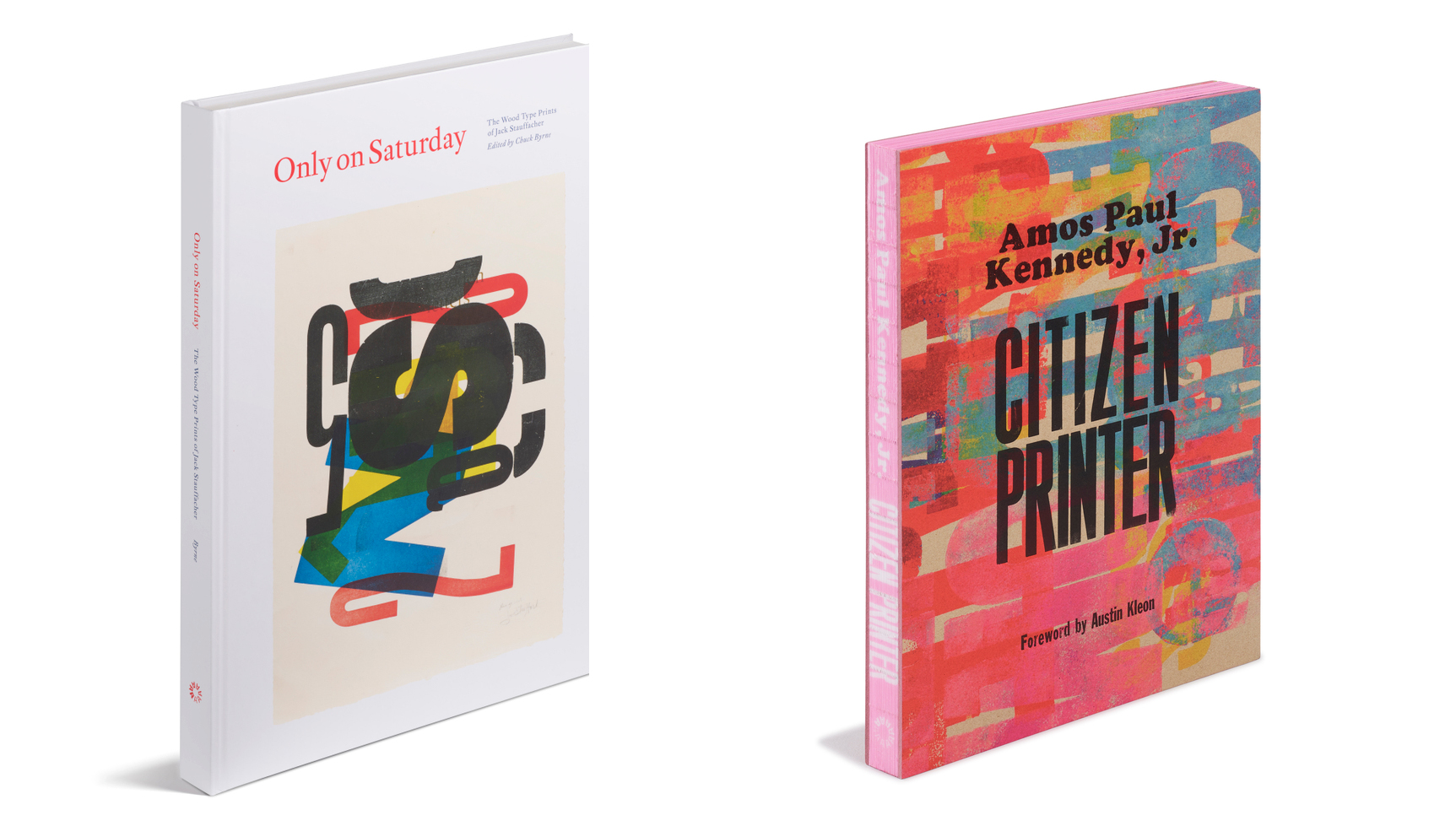
Published in 2024, Citizen Printer quickly became one of our bestsellers, as Kennedy’s bold and exuberant messages of social justice resonate with art lovers and activists alike. It’s possibly my favorite of all our books, but please don’t tell the other books.
Overviews
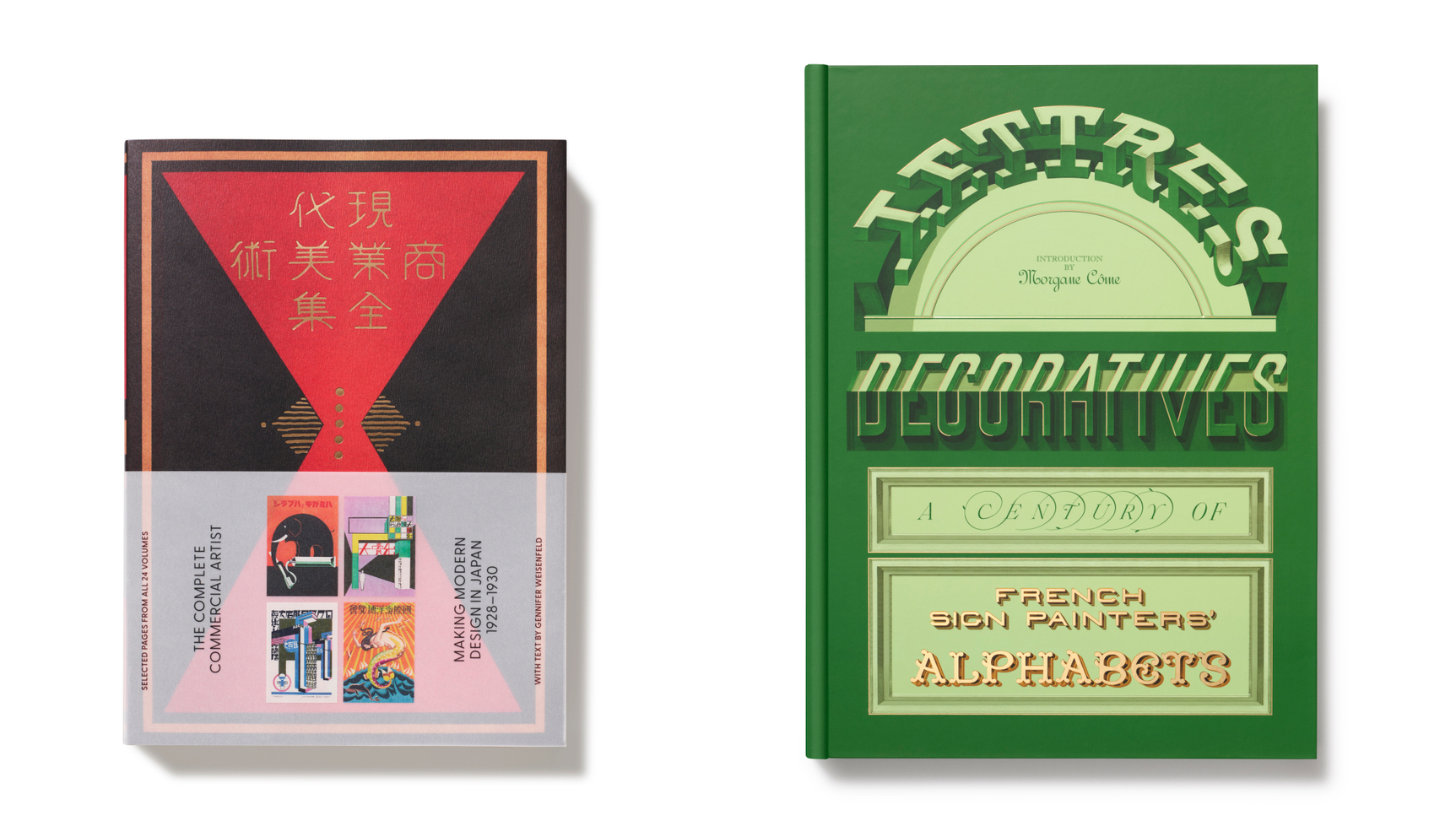
Our overviews are big books focused on a single subject area—either a publication that is too long to present in full as a facsimile, or a specific collections strength that is best served by a deep dive.
- The Complete Commercial Artist: Making Modern Design in Japan, 1928–1930
- Lettres Décoratives: A Century of French Sign Painters’ Alphabets
Lettres Decoratives: A Century of French Sign Painters’ Alphabets is our most recent overview and is now only available in limited supplies. It collects more than 150 plates from a dozen portfolios created by French sign painters as teaching tools and displays of their mastery in the late 1800s and early 1900s. The result is a large-format coffee table book full of colorful and fascinating letterforms. Some of these styles you can still see in the streets of Paris today.
Compiled by editor Chris Westcott, the book includes an introduction by contemporary French sign painter Morgan Côme, who helps readers understand where these letterforms originated and how the portfolios may have educated a generation of sign painters. The design of its pages was overseen by art director Alice Chau, who worked with French firm Violaine & Jérémy to create the sophisticated layout and custom dimensional lettering on the cover.
Gift Products
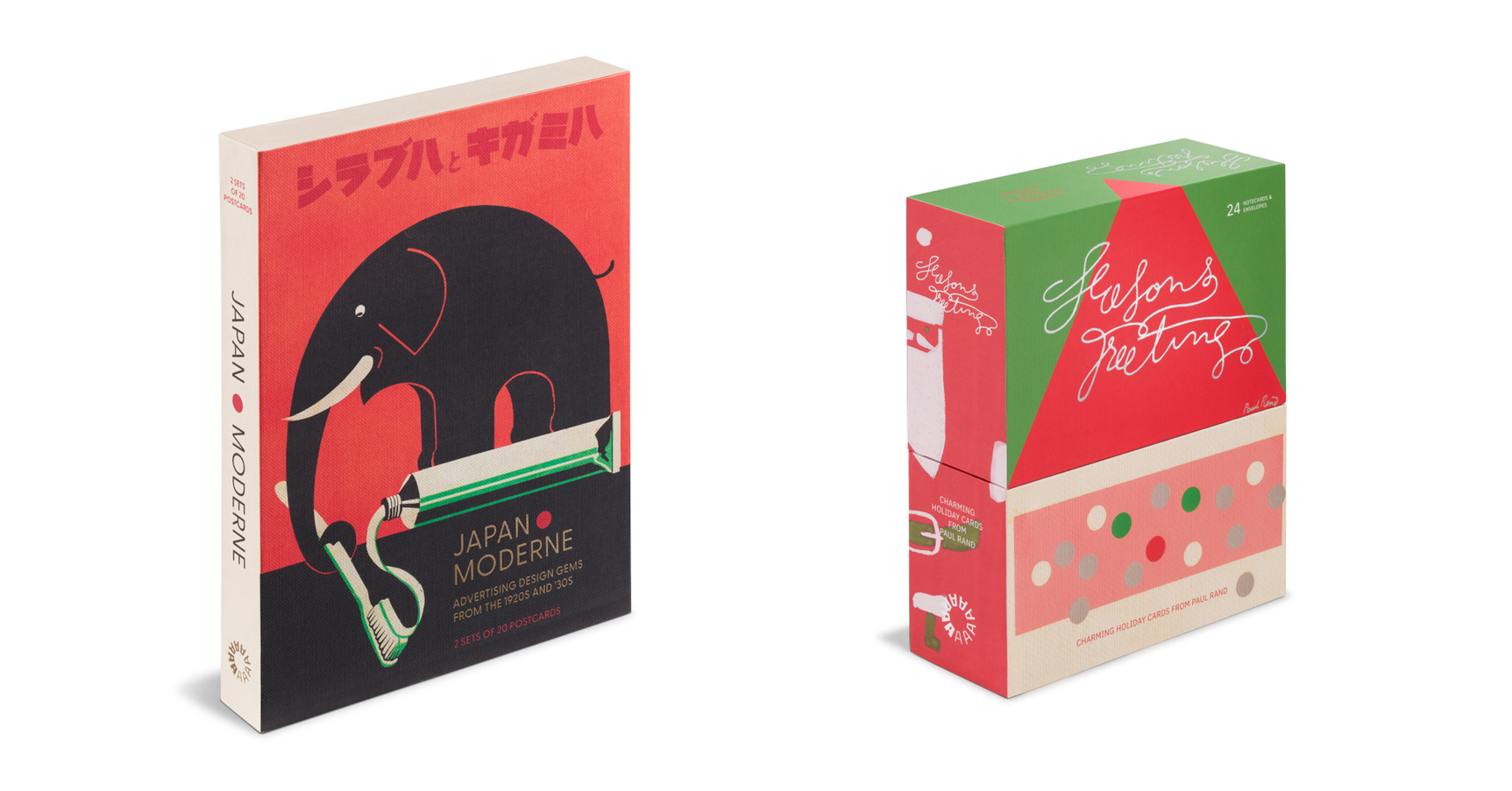
Lastly, we also offer gift products that showcase treasures from the Archive. We have paper products, such as charming holiday cards printed with rarely-seen artwork from Paul Rand and the stunning postcards of Japan Moderne: Advertising Design Gems from the 1920s and ’30s, which feature a selection of art from our award-winning book The Complete Commercial Artist. I buy a bunch of card and postcard sets to have around the house, which I give as last minute birthday presents along with a page of stamps—people love them! We also stock woven products like silk scarves or warm blankets decorated with typographic motifs.
“We endeavor to provide something at multiple price points, whether it’s a higher-end facsimile edition that pulls out all the production stops or a simple deck of postcards featuring beautiful artwork,” says Lucie. “The hope is for everyone to be able to take a part of the Archive home with them.”
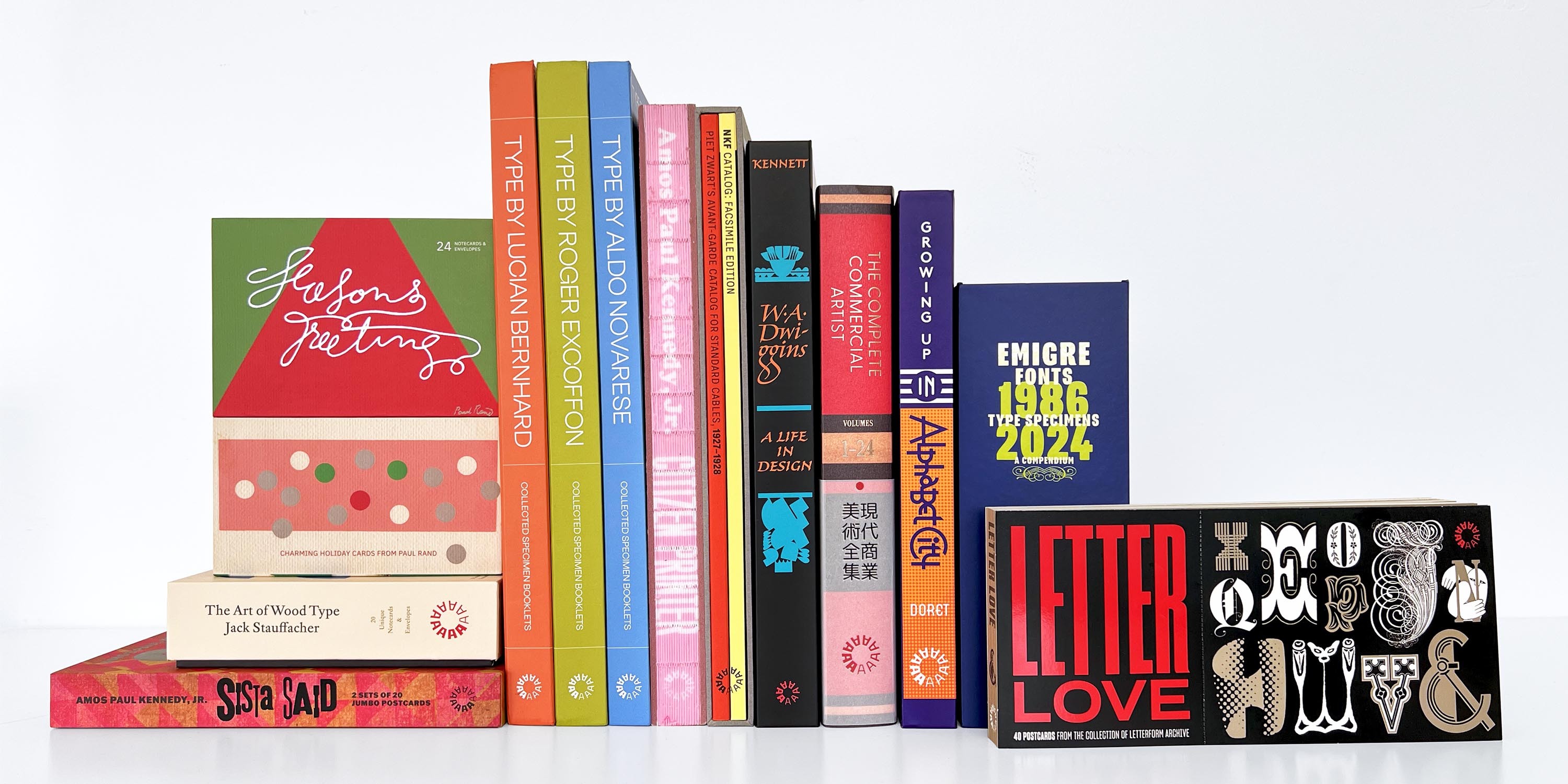
Whether your interest is in an artist, an era, or a specific subject matter, taken together, our publishing program provides a rich education in graphic design, and every purchase you make supports scholarship, conservation, and preservation of graphic design history. May the vivid stories, exceptional reproductions, and unique designs of our graphic design, typography, and lettering books inspire the artist in you and encourage you to explore more of Letterform Archive’s collection.
—Grace Tsai, Revenue Director